Skip to content
GenoLensGenoLens

NMNAT1

Chr 1p36.22

nicotinamide nucleotide adenylyltransferase 1

Aliases:
NMNAT, PNAT1
MANE:
ENST00000377205.6

Annotations refreshed 9 hours ago.

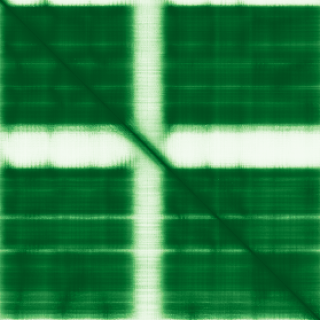
Predicted protein structure

Clinical relevance (Genomics England PanelApp)

Diagnostic Grade (Green)

  • DDG2P

    BIALLELIC, autosomal or pseudoautosomal
  • Retinal disorders

    BIALLELIC, autosomal or pseudoautosomal
  • Fetal anomalies

    BIALLELIC, autosomal or pseudoautosomal
  • Skeletal dysplasia

    BIALLELIC, autosomal or pseudoautosomal
  • Intellectual disability

    BIALLELIC, autosomal or pseudoautosomal

Disease associations (Open Targets)

  • Leber congenital amaurosis 9

    0.83
  • Leber congenital amaurosis

    0.69
  • spondyloepiphyseal dysplasia, sensorineural hearing loss, impaired intellectual development, and leber congenital amaurosis

    0.62
  • Retinal dystrophy

    0.54
  • Cone rod dystrophy

    0.54
  • cone-rod dystrophy

    0.54
  • hereditary disease

    0.47
  • NMNAT1-related retinopathy

    0.44
  • retinal disorder

    0.43
  • Rod-cone dystrophy

    0.39

Score is the Open Targets composite evidence score (0-1). Higher = stronger gene-disease association.

Protein function (UniProt)

Nicotinamide/nicotinic acid mononucleotide adenylyltransferase 1

Catalyzes the formation of NAD(+) from nicotinamide mononucleotide (NMN) and ATP (PubMed:17402747). Can also use the deamidated form; nicotinic acid mononucleotide (NaMN) as substrate with the same efficiency (PubMed:17402747). Can use triazofurin monophosphate (TrMP) as substrate (PubMed:17402747). Also catalyzes the reverse reaction, i.e. the pyrophosphorolytic cleavage of NAD(+) (PubMed:17402747). For the pyrophosphorolytic activity, prefers NAD(+) and NaAD as substrates and degrades NADH, nicotinic acid adenine dinucleotide phosphate (NHD) and nicotinamide guanine dinucleotide (NGD) less effectively (PubMed:17402747). Involved in the synthesis of ATP in the nucleus, together with PARP1, PARG and NUDT5 (PubMed:27257257). Nuclear ATP generation is required for extensive chromatin remodeling events that are energy-consuming (PubMed:27257257). Also acts as a cofactor for glutamate and aspartate ADP-ribosylation by directing PARP1 catalytic activity to glutamate and aspartate residues on histones (By similarity). Fails to cleave phosphorylated dinucleotides NADP(+), NADPH and NaADP(+) (PubMed:17402747). Protects against axonal degeneration following mechanical or toxic insults (By similarity). Neural protection does not correlate with cellular NAD(+) levels but may still require enzyme activity (By similarity)

Data sources: HGNC (CC BY 4.0), AlphaFold (CC BY 4.0, Jumper et al. Nature 2021), Genomics England PanelApp (CC BY 4.0), ClinGen, Open Targets (CC0), UniProt.

Not for sole clinical decision-making. Always verify against primary sources.