
AlphaFold predicted structure
NOVA2 · Q9UNW9
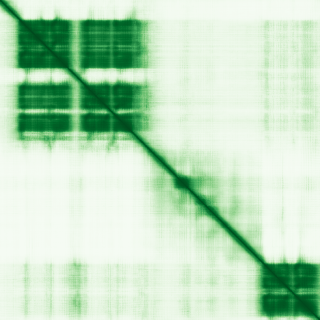
Mean pLDDT
63.5/ 100
Low
492 residues
Confidence breakdown
- Very high(≥ 90)21%
- Confident(70–90)25%
- Low(50–70)15%
- Very low(< 50)39%
Open interactive 3D viewer
AlphaFold (Jumper et al., 2021) · CC BY 4.0
NOVA alternative splicing regulator 2
Annotations refreshed 2 months ago.
Diagnostic Grade (Green)
DDG2P
MONOALLELIC, autosomal or pseudoautosomal, imprinted status unknownFetal anomalies
MONOALLELIC, autosomal or pseudoautosomal, NOT imprintedIntellectual disability
MONOALLELIC, autosomal or pseudoautosomal, NOT imprintedneurodevelopmental disorder with or without autistic features and/or structural brain abnormalities
complex neurodevelopmental disorder
neurodevelopmental disorder
Severe intellectual disability
Intellectual disability
hereditary disease
dementia
neurodegenerative disease
ataxia telangiectasia
neuroblastoma
Score is the Open Targets composite evidence score (0-1). Higher = stronger gene-disease association.
RNA-binding protein Nova-2
Functions to regulate alternative splicing in neurons by binding pre-mRNA in a sequence-specific manner to activate exon inclusion or exclusion (PubMed:32197073). It binds specifically to the sequences 5'-YCAY-3' and regulates splicing in only a subset of regulated exons (PubMed:10811881). Binding to an exonic 5'-YCAY-3' cluster changes the protein complexes assembled on pre-mRNA, blocking U1 snRNP binding and exon inclusion, whereas binding to an intronic 5'-YCAY-3' cluster enhances spliceosome assembly and exon inclusion. With NOVA1, they perform unique biological functions in different brain areas and cell types. Uniquely regulates alternative splicing events of a series of axon guidance related genes during cortical development, being essential for central nervous system development by regulating neural networks wiring. Regulates differentially alternative splicing on the same transcripts expressed in different neurons. This includes functional differences in transcripts expressed in cortical and cerebellar excitatory versus inhibitory neurons where is required for, respectively, development of laminar structure and motor coordination and synapse formation. Also the regulation the regulation of intron retention can sequester the trans-acting splicing factor PTBP2, acting as a variable cis-acting scaffolding platform for PTBP2 across various natural conditions (By similarity)
NOVA2 · Q9UNW9
Mean pLDDT
63.5/ 100
Low
492 residues
Confidence breakdown
AlphaFold (Jumper et al., 2021) · CC BY 4.0