Skip to content
GenoLensGenoLens

NPHP3

Chr 3q22.1

nephrocystin 3

Aliases:
NPH3, KIAA2000, FLJ30691, FLJ36696, MKS7
MANE:
ENST00000337331.10

Annotations refreshed 1 month ago.

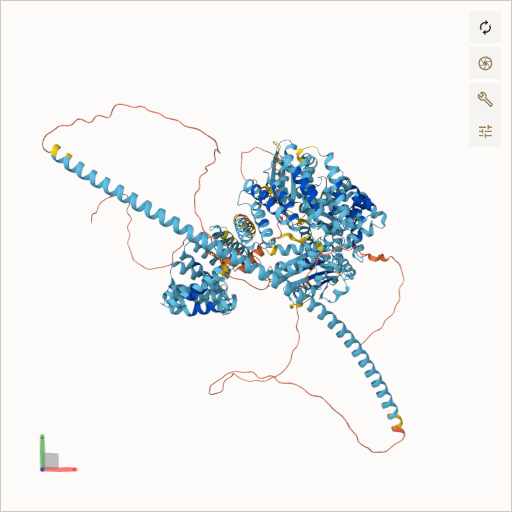
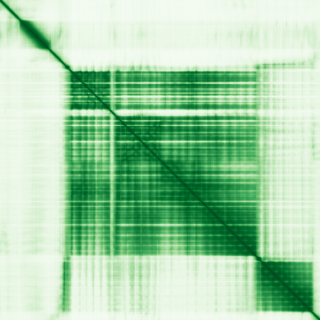
Predicted protein structure

Clinical relevance (Genomics England PanelApp)

Diagnostic Grade (Green)

  • CAKUT

    BIALLELIC, autosomal or pseudoautosomal
  • Cystic kidney disease

    BIALLELIC, autosomal or pseudoautosomal
  • DDG2P

    BIALLELIC, autosomal or pseudoautosomal
  • Fetal anomalies

    BIALLELIC, autosomal or pseudoautosomal
  • Neurological ciliopathies

    BIALLELIC, autosomal or pseudoautosomal
  • Ophthalmological ciliopathies

    BIALLELIC, autosomal or pseudoautosomal
  • Rare multisystem ciliopathy disorders

    BIALLELIC, autosomal or pseudoautosomal
  • Renal ciliopathies

    BIALLELIC, autosomal or pseudoautosomal

+16 more panels — install the extension to see the full list inline on any page.

Disease associations (Open Targets)

  • nephronophthisis 3

    0.82
  • nephronophthisis

    0.80
  • renal-hepatic-pancreatic dysplasia 1

    0.78
  • NPHP3-related Meckel-like syndrome

    0.78
  • renal-hepatic-pancreatic dysplasia

    0.73
  • Senior-Loken syndrome

    0.67
  • Meckel syndrome

    0.66
  • Joubert syndrome and related disorders

    0.52
  • nephronophthisis 2

    0.39
  • optic atrophy

    0.37

Score is the Open Targets composite evidence score (0-1). Higher = stronger gene-disease association.

Protein function (UniProt)

Nephrocystin-3

Required for normal ciliary development and function. Inhibits disheveled-1-induced canonical Wnt-signaling activity and may also play a role in the control of non-canonical Wnt signaling which regulates planar cell polarity. Probably acts as a molecular switch between different Wnt signaling pathways. Required for proper convergent extension cell movements

Curated MONDO disease pages that list NPHP3 among their top associated genes.

Data sources: HGNC (CC BY 4.0), AlphaFold (CC BY 4.0, Jumper et al. Nature 2021), Genomics England PanelApp (CC BY 4.0), ClinGen, Open Targets (CC0), UniProt.

Not for sole clinical decision-making. Always verify against primary sources.