Skip to content
GenoLensGenoLens

NPHP4

Chr 1p36.31

nephrocystin 4

Aliases:
SLSN4, KIAA0673, POC10
MANE:
ENST00000378156.9

Annotations refreshed 1 month ago.

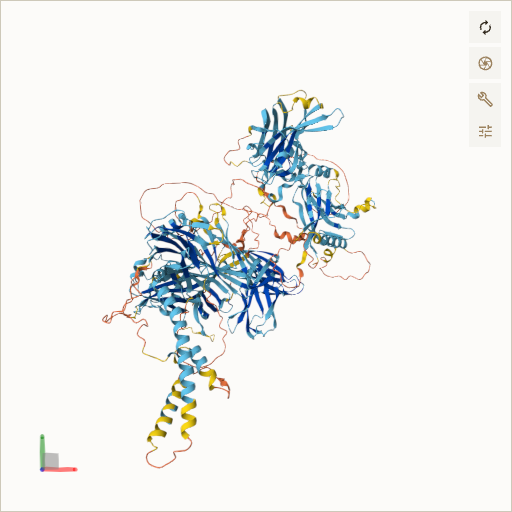
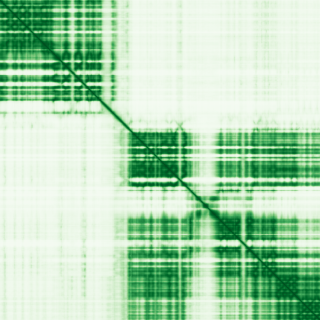
Predicted protein structure

Clinical relevance (Genomics England PanelApp)

Diagnostic Grade (Green)

  • Cystic kidney disease

    BIALLELIC, autosomal or pseudoautosomal
  • DDG2P

    BIALLELIC, autosomal or pseudoautosomal
  • Fetal anomalies

    BIALLELIC, autosomal or pseudoautosomal
  • Ophthalmological ciliopathies

    BIALLELIC, autosomal or pseudoautosomal
  • Rare multisystem ciliopathy disorders

    BIALLELIC, autosomal or pseudoautosomal
  • Renal ciliopathies

    BIALLELIC, autosomal or pseudoautosomal
  • Retinal disorders

    BIALLELIC, autosomal or pseudoautosomal
  • Tubulointerstitial kidney disease

    BIALLELIC, autosomal or pseudoautosomal

+12 more panels — install the extension to see the full list inline on any page.

Disease associations (Open Targets)

  • nephronophthisis

    0.84
  • Senior-Loken syndrome

    0.78
  • nephronophthisis 4

    0.77
  • Senior-Loken syndrome 4

    0.73
  • Retinal dystrophy

    0.47
  • kidney disorder

    0.45
  • alcohol drinking

    0.37
  • eye disorder

    0.37
  • Juvenile nephronophthisis

    0.37
  • retinitis pigmentosa

    0.36

Score is the Open Targets composite evidence score (0-1). Higher = stronger gene-disease association.

Protein function (UniProt)

Nephrocystin-4

Involved in the organization of apical junctions; the function is proposed to implicate a NPHP1-4-8 module (PubMed:19755384, PubMed:21565611). Does not seem to be strictly required for ciliogenesis (PubMed:21565611). Required for building functional cilia. Involved in the organization of the subapical actin network in multiciliated epithelial cells. Seems to recruit INT to basal bodies of motile cilia which subsequently interacts with actin-modifying proteins such as DAAM1 (By similarity). In cooperation with INVS may down-regulate the canonical Wnt pathway and promote the Wnt-PCP pathway by regulating expression and subcellular location of disheveled proteins. Stabilizes protein levels of JADE1 and promotes its translocation to the nucleus leading to cooperative inhibition of canonical Wnt signaling (PubMed:21498478, PubMed:22654112). Acts as a negative regulator of the hippo pathway by association with LATS1 and modifying LATS1-dependent phosphorylation and localization of WWTR1/TAZ (PubMed:21555462)

Curated MONDO disease pages that list NPHP4 among their top associated genes.

Data sources: HGNC (CC BY 4.0), AlphaFold (CC BY 4.0, Jumper et al. Nature 2021), Genomics England PanelApp (CC BY 4.0), ClinGen, Open Targets (CC0), UniProt.

Not for sole clinical decision-making. Always verify against primary sources.