
AlphaFold predicted structure
NPRL3 · Q12980
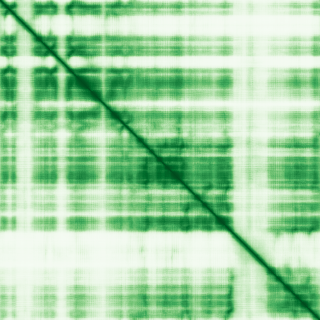
Mean pLDDT
66.1/ 100
Low
569 residues
Confidence breakdown
- Very high(≥ 90)0%
- Confident(70–90)53%
- Low(50–70)26%
- Very low(< 50)21%
Open interactive 3D viewer
AlphaFold (Jumper et al., 2021) · CC BY 4.0
NPR3 like, GATOR1 complex subunit
Annotations refreshed 2 months ago.
Diagnostic Grade (Green)
DDG2P
MONOALLELIC, autosomal or pseudoautosomal, imprinted status unknownEarly onset or syndromic epilepsy
MONOALLELIC, autosomal or pseudoautosomal, imprinted status unknownMalformations of cortical development
MONOALLELIC, autosomal or pseudoautosomal, NOT imprintedFetal anomalies
MONOALLELIC, autosomal or pseudoautosomal, NOT imprintedfamilial focal epilepsy with variable foci
Seizure
hereditary disease
neurodegenerative disease
focal epilepsy
epilepsy, familial focal, with variable foci 1
Intellectual disability
benign thyroid gland neoplasm
epilepsy
sickle cell disease
Score is the Open Targets composite evidence score (0-1). Higher = stronger gene-disease association.
GATOR1 complex protein NPRL3
As a component of the GATOR1 complex functions as an inhibitor of the amino acid-sensing branch of the mTORC1 pathway (PubMed:23723238, PubMed:29590090, PubMed:35338845). In response to amino acid depletion, the GATOR1 complex has GTPase activating protein (GAP) activity and strongly increases GTP hydrolysis by RagA/RRAGA (or RagB/RRAGB) within heterodimeric Rag complexes, thereby turning them into their inactive GDP-bound form, releasing mTORC1 from lysosomal surface and inhibiting mTORC1 signaling (PubMed:23723238, PubMed:29590090, PubMed:35338845). In the presence of abundant amino acids, the GATOR1 complex is negatively regulated by GATOR2, the other GATOR subcomplex, in this amino acid-sensing branch of the TORC1 pathway (PubMed:23723238)
NPRL3 · Q12980
Mean pLDDT
66.1/ 100
Low
569 residues
Confidence breakdown
AlphaFold (Jumper et al., 2021) · CC BY 4.0