
AlphaFold predicted structure
NR0B1 · P51843
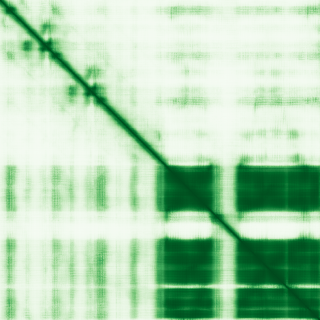
Mean pLDDT
59.5/ 100
Low
470 residues
Confidence breakdown
- Very high(≥ 90)25%
- Confident(70–90)14%
- Low(50–70)13%
- Very low(< 50)49%
Open interactive 3D viewer
AlphaFold (Jumper et al., 2021) · CC BY 4.0
nuclear receptor subfamily 0 group B member 1
Annotations refreshed 2 months ago.
Diagnostic Grade (Green)
Congenital adrenal hypoplasia
X-LINKED: hemizygous mutation in males, biallelic mutations in femalesDifferences in sex development
X-LINKED: hemizygous mutation in males, biallelic mutations in femalesFetal anomalies
X-LINKED: hemizygous mutation in males, monoallelic mutations in females may cause disease (may be less severe, later onset than males)Hypogonadotropic hypogonadism
X-LINKED: hemizygous mutation in males, biallelic mutations in femalesHypogonadotropic hypogonadism (GMS)
X-LINKED: hemizygous mutation in males, biallelic mutations in femalesCytomegalic congenital adrenal hypoplasia
X-linked adrenal hypoplasia congenita
46,XY complete gonadal dysgenesis
46,XX testicular disorder of sex development
46,XY partial gonadal dysgenesis
neurodegenerative disease
alternating hemiplegia of childhood
hereditary disease
hepatocellular carcinoma
prostate carcinoma
Score is the Open Targets composite evidence score (0-1). Higher = stronger gene-disease association.
Nuclear receptor subfamily 0 group B member 1
Nuclear receptor that lacks a DNA-binding domain and acts as a corepressor that inhibits the transcriptional activity of other nuclear receptors through heterodimeric interactions (PubMed:12482977, PubMed:32433991). Component of a cascade required for the development of the hypothalamic-pituitary-adrenal-gonadal axis (PubMed:7990953, PubMed:8675564). May also have a role in the development of the embryo and in the maintenance of embryonic stem cell pluripotency (By similarity)
NR0B1 · P51843
Mean pLDDT
59.5/ 100
Low
470 residues
Confidence breakdown
AlphaFold (Jumper et al., 2021) · CC BY 4.0