AlphaFold predicted structure
NRCAM · Q92823
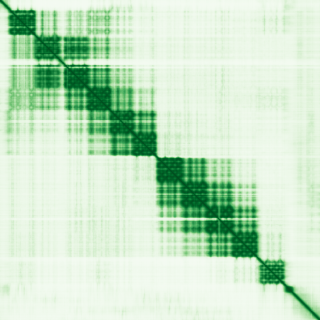
Mean pLDDT
77.4/ 100
Confident
1,304 residues
Confidence breakdown
- Very high(≥ 90)35%
- Confident(70–90)41%
- Low(50–70)9%
- Very low(< 50)16%
AlphaFold (Jumper et al., 2021) · CC BY 4.0
neuronal cell adhesion molecule
Annotations refreshed 9 hours ago.
Diagnostic Grade (Green)
DDG2P
BIALLELIC, autosomal or pseudoautosomalIntellectual disability
BIALLELIC, autosomal or pseudoautosomalChildhood onset hereditary spastic paraplegia
BIALLELIC, autosomal or pseudoautosomalSkeletal dysplasia
BIALLELIC, autosomal or pseudoautosomalneurodevelopmental disorder with neuromuscular and skeletal abnormalities
complex neurodevelopmental disorder
stroke disorder
alcohol drinking
ovarian neoplasm
Raynaud disease
liver disorder
hereditary disease
ocular hypotension
myopia
Score is the Open Targets composite evidence score (0-1). Higher = stronger gene-disease association.
Neuronal cell adhesion molecule
Cell adhesion protein that is required for normal responses to cell-cell contacts in brain and in the peripheral nervous system. Plays a role in neurite outgrowth in response to contactin binding. Plays a role in mediating cell-cell contacts between Schwann cells and axons. Plays a role in the formation and maintenance of the nodes of Ranvier on myelinated axons. Nodes of Ranvier contain clustered sodium channels that are crucial for the saltatory propagation of action potentials along myelinated axons. During development, nodes of Ranvier are formed by the fusion of two heminodes. Required for normal clustering of sodium channels at heminodes; not required for the formation of mature nodes with normal sodium channel clusters. Required, together with GLDN, for maintaining NFASC and sodium channel clusters at mature nodes of Ranvier
NRCAM · Q92823

Mean pLDDT
77.4/ 100
Confident
1,304 residues
Confidence breakdown
AlphaFold (Jumper et al., 2021) · CC BY 4.0