AlphaFold predicted structure
NRROS · Q86YC3
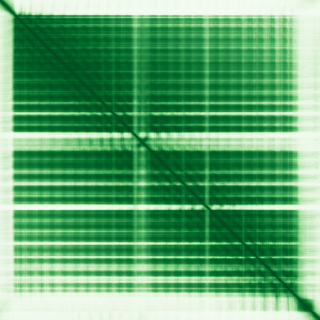
Mean pLDDT
83.3/ 100
Confident
692 residues
Confidence breakdown
- Very high(≥ 90)54%
- Confident(70–90)25%
- Low(50–70)15%
- Very low(< 50)7%
AlphaFold (Jumper et al., 2021) · CC BY 4.0
negative regulator of reactive oxygen species
Annotations refreshed 9 hours ago.
Diagnostic Grade (Green)
DDG2P
BIALLELIC, autosomal or pseudoautosomalEarly onset or syndromic epilepsy
BIALLELIC, autosomal or pseudoautosomalIntellectual disability
BIALLELIC, autosomal or pseudoautosomalIntracerebral calcification disorders
BIALLELIC, autosomal or pseudoautosomalseizures, early-onset, with neurodegeneration and brain calcifications
asthma
allergic rhinitis
Eczematoid dermatitis
respiratory system disorder
allergic disease
atopic asthma
chronic rhinosinusitis
obesity disorder
drug allergy
Score is the Open Targets composite evidence score (0-1). Higher = stronger gene-disease association.
Transforming growth factor beta activator LRRC33
Key regulator of transforming growth factor beta-1 (TGFB1) specifically required for microglia function in the nervous system (By similarity). Required for activation of latent TGF-beta-1 in macrophages and microglia: associates specifically via disulfide bonds with the Latency-associated peptide (LAP), which is the regulatory chain of TGFB1, and regulates integrin-dependent activation of TGF-beta-1 (By similarity). TGF-beta-1 activation mediated by LRRC33/NRROS is highly localized: there is little spreading of TGF-beta-1 activated from one microglial cell to neighboring microglia, suggesting the existence of localized and selective activation of TGF-beta-1 by LRRC33/NRROS (By similarity). Indirectly plays a role in Toll-like receptor (TLR) signaling: ability to inhibit TLR-mediated NF-kappa-B activation and cytokine production is probably a consequence of its role in TGF-beta-1 signaling (PubMed:23545260)
NRROS · Q86YC3

Mean pLDDT
83.3/ 100
Confident
692 residues
Confidence breakdown
AlphaFold (Jumper et al., 2021) · CC BY 4.0