
AlphaFold predicted structure
NTHL1 · P78549
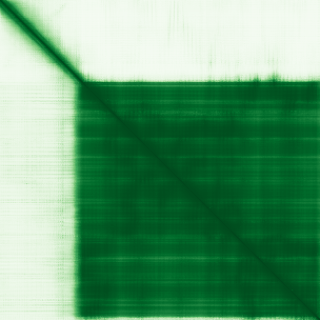
Mean pLDDT
82.6/ 100
Confident
304 residues
Confidence breakdown
- Very high(≥ 90)73%
- Confident(70–90)2%
- Low(50–70)3%
- Very low(< 50)22%
Open interactive 3D viewer
AlphaFold (Jumper et al., 2021) · CC BY 4.0
nth like DNA glycosylase 1
Annotations refreshed 2 months ago.
Diagnostic Grade (Green)
Adult solid tumours cancer susceptibility
BIALLELIC, autosomal or pseudoautosomalAdult solid tumours for rare disease
BIALLELIC, autosomal or pseudoautosomalColorectal cancer pertinent cancer susceptibility
BIALLELIC, autosomal or pseudoautosomalGI tract tumours
BIALLELIC, autosomal or pseudoautosomalInherited polyposis and early onset colorectal cancer - germline testing
BIALLELIC, autosomal or pseudoautosomalfamilial adenomatous polyposis 3
attenuated familial adenomatous polyposis
cancer
Inherited cancer-predisposing syndrome
hereditary neoplastic syndrome
NTHL1-deficiency tumor predisposition syndrome
colorectal cancer
breast carcinoma
prostate adenocarcinoma
head and neck squamous cell carcinoma
Score is the Open Targets composite evidence score (0-1). Higher = stronger gene-disease association.
Endonuclease III-like protein 1
Bifunctional DNA N-glycosylase with associated apurinic/apyrimidinic (AP) lyase function that catalyzes the first step in base excision repair (BER), the primary repair pathway for the repair of oxidative DNA damage (PubMed:29610152, PubMed:9927729). The DNA N-glycosylase activity releases the damaged DNA base from DNA by cleaving the N-glycosidic bond, leaving an AP site. The AP-lyase activity cleaves the phosphodiester bond 3' to the AP site by a beta-elimination. Primarily recognizes and repairs oxidative base damage of pyrimidines. Also has 8-oxo-7,8-dihydroguanine (8-oxoG) DNA glycosylase activity. Acts preferentially on DNA damage opposite guanine residues in DNA. Is able to process lesions in nucleosomes without requiring or inducing nucleosome disruption
NTHL1 · P78549
Mean pLDDT
82.6/ 100
Confident
304 residues
Confidence breakdown
AlphaFold (Jumper et al., 2021) · CC BY 4.0