
AlphaFold predicted structure
NTN1 · O95631
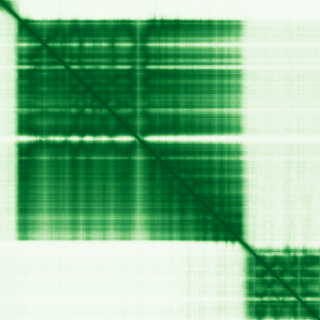
Mean pLDDT
88.5/ 100
Confident
604 residues
Confidence breakdown
- Very high(≥ 90)70%
- Confident(70–90)20%
- Low(50–70)4%
- Very low(< 50)6%
Open interactive 3D viewer
AlphaFold (Jumper et al., 2021) · CC BY 4.0
netrin 1
Annotations refreshed 2 months ago.
Moderate Evidence (Amber)
Childhood onset dystonia, chorea or related movement disorder
MONOALLELIC, autosomal or pseudoautosomal, NOT imprintedMonogenic hearing loss
MONOALLELIC, autosomal or pseudoautosomal, NOT imprintedStructural eye disease
MONOALLELIC, autosomal or pseudoautosomal, NOT imprintedLimb disorders
MONOALLELIC, autosomal or pseudoautosomal, NOT imprintedmirror movements 4
cleft palate
cleft lip
orofacial cleft
familial congenital mirror movements
lacrimal apparatus disorder
placental abruption
multinodular goiter
sweat gland disorder
response to antihypertensive drug
Score is the Open Targets composite evidence score (0-1). Higher = stronger gene-disease association.
Netrin-1
Netrins control guidance of CNS commissural axons and peripheral motor axons. Its association with either DCC or some UNC5 receptors will lead to axon attraction or repulsion, respectively. Binding to UNC5C might cause dissociation of UNC5C from polymerized TUBB3 in microtubules and thereby lead to increased microtubule dynamics and axon repulsion (PubMed:28483977). Involved in dorsal root ganglion axon projection towards the spinal cord (PubMed:28483977). It also serves as a survival factor via its association with its receptors which prevent the initiation of apoptosis. Involved in tumorigenesis by regulating apoptosis (PubMed:15343335)
NTN1 · O95631
Mean pLDDT
88.5/ 100
Confident
604 residues
Confidence breakdown
AlphaFold (Jumper et al., 2021) · CC BY 4.0