
AlphaFold predicted structure
OCLN · Q16625
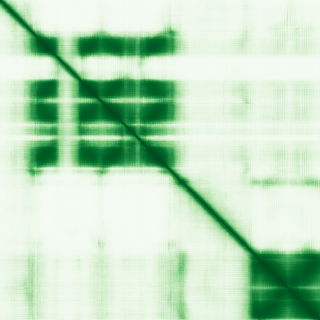
Mean pLDDT
65.6/ 100
Low
522 residues
Confidence breakdown
- Very high(≥ 90)29%
- Confident(70–90)18%
- Low(50–70)16%
- Very low(< 50)37%
Open interactive 3D viewer
AlphaFold (Jumper et al., 2021) · CC BY 4.0
occludin
Annotations refreshed 2 months ago.
Diagnostic Grade (Green)
DDG2P
BIALLELIC, autosomal or pseudoautosomalEarly onset or syndromic epilepsy
BIALLELIC, autosomal or pseudoautosomalFetal anomalies
BIALLELIC, autosomal or pseudoautosomalIntellectual disability
BIALLELIC, autosomal or pseudoautosomalIntracerebral calcification disorders
BIALLELIC, autosomal or pseudoautosomalMalformations of cortical development
BIALLELIC, autosomal or pseudoautosomalStructural basal ganglia disorders
BIALLELIC, autosomal or pseudoautosomalWhite matter disorders and cerebral calcification - narrow panel
BIALLELIC, autosomal or pseudoautosomal+4 more panels — install the extension to see the full list inline on any page.
Congenital intrauterine infection-like syndrome
hypertensive disorder
Increased blood pressure
neurodegenerative disease
nodular goiter
Primary microcephaly
Global developmental delay
Cerebral calcification
nephrolithiasis
cervical carcinoma
Score is the Open Targets composite evidence score (0-1). Higher = stronger gene-disease association.
Occludin
May play a role in the formation and regulation of the tight junction (TJ) paracellular permeability barrier. It is able to induce adhesion when expressed in cells lacking tight junctions
OCLN · Q16625
Mean pLDDT
65.6/ 100
Low
522 residues
Confidence breakdown
AlphaFold (Jumper et al., 2021) · CC BY 4.0