
AlphaFold predicted structure
OGT · O15294
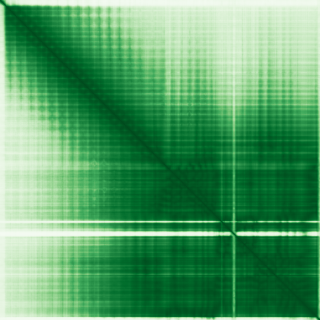
Mean pLDDT
93.1/ 100
Very high
1,046 residues
Confidence breakdown
- Very high(≥ 90)89%
- Confident(70–90)6%
- Low(50–70)1%
- Very low(< 50)3%
Open interactive 3D viewer
AlphaFold (Jumper et al., 2021) · CC BY 4.0
O-linked N-acetylglucosamine (GlcNAc) transferase
Annotations refreshed 2 months ago.
Diagnostic Grade (Green)
DDG2P
X-LINKED: hemizygous mutation in males, monoallelic mutations in females may cause disease (may be less severe, later onset than males)Intellectual disability
X-LINKED: hemizygous mutation in males, monoallelic mutations in females may cause disease (may be less severe, later onset than males)Rare syndromic craniosynostosis or isolated multisuture synostosis
X-LINKED: hemizygous mutation in males, biallelic mutations in femalesintellectual disability, X-linked 106
X-linked non-syndromic intellectual disability
neurodegenerative disease
hereditary disease
Intellectual disability
X-linked dystonia-parkinsonism
hepatocellular carcinoma
cancer
neoplasm
breast cancer
Score is the Open Targets composite evidence score (0-1). Higher = stronger gene-disease association.
UDP-N-acetylglucosamine--peptide N-acetylglucosaminyltransferase 110 kDa subunit
Catalyzes the transfer of a single N-acetylglucosamine from UDP-GlcNAc to a serine or threonine residue in cytoplasmic and nuclear proteins resulting in their modification with a beta-linked N-acetylglucosamine (O-GlcNAc) (PubMed:12150998, PubMed:15361863, PubMed:19451179, PubMed:20018868, PubMed:21240259, PubMed:21285374, PubMed:23103939, PubMed:26237509, PubMed:26369908, PubMed:26678539, PubMed:27713473, PubMed:37541260, PubMed:37962578). Glycosylates a large and diverse number of proteins including histone H2B, AKT1, AMPK, ATG4B, CAPRIN1, EZH2, FNIP1, GSDMD, KRT7, LMNA, LMNB1, LMNB2, RPTOR, HOXA1, PFKL, KMT2E/MLL5, MAPT/TAU, TET2, RBL2, RET, NOD2 and HCFC1 (PubMed:19451179, PubMed:20200153, PubMed:21285374, PubMed:22923583, PubMed:23353889, PubMed:24474760, PubMed:26237509, PubMed:26369908, PubMed:26678539, PubMed:27527864, PubMed:30699359, PubMed:34074792, PubMed:34667079, PubMed:37541260, PubMed:37962578). Can regulate their cellular processes via cross-talk between glycosylation and phosphorylation or by affecting proteolytic processing (PubMed:21285374). Involved in insulin resistance in muscle and adipocyte cells via glycosylating insulin signaling components and inhibiting the 'Thr-308' phosphorylation of AKT1, enhancing IRS1 phosphorylation and attenuating insulin signaling (By similarity). Involved in glycolysis regulation by mediating glycosylation of 6-phosphofructokinase PFKL, inhibiting its activity (PubMed:22923583). Plays a key role in chromatin structure by mediating O-GlcNAcylation of 'Ser-112' of histone H2B: recruited to CpG-rich transcription start sites of active genes via its interaction with TET proteins (TET1, TET2 or TET3) (PubMed:22121020, PubMed:23353889). As part of the NSL complex indirectly involved in acetylation of nucleosomal histone H4 on several lysine residues (PubMed:20018852). O-GlcNAcylation of 'Ser-75' of EZH2 increases its stability, and facilitating the formation of H3K27me3 by the PRC2/EED-EZH2 complex (PubMed:24474760). Stabilizes KMT2E/MLL5 by mediating its glycosylation, thereby preventing KMT2E/MLL5 ubiquitination (PubMed:26678539). Regulates circadian oscillation of the clock genes and glucose homeostasis in the liver (By similarity). Stabilizes clock proteins BMAL1 and CLOCK through O-glycosylation, which prevents their ubiquitination and subsequent degradation (By similarity). Promotes the CLOCK-BMAL1-mediated transcription of genes in the negative loop of the circadian clock such as PER1/2 and CRY1/2. O-glycosylates HCFC1 and regulates its proteolytic processing and transcriptional activity (PubMed:21285374, PubMed:28302723, PubMed:28584052). Component of a THAP1/THAP3-HCFC1-OGT complex that is required for the regulation of the transcriptional activity of RRM1 (PubMed:20200153). Regulates mitochondrial motility in neurons by mediating glycosylation of TRAK1 (By similarity). Promotes autophagy by mediating O-glycosylation of ATG4B (PubMed:27527864). Acts as a regulator of mTORC1 signaling by mediating O-glycosylation of RPTOR and FNIP1: O-GlcNAcylation of RPTOR in response to glucose sufficiency promotes activation of the mTORC1 complex (PubMed:30699359, PubMed:37541260)
OGT · O15294
Mean pLDDT
93.1/ 100
Very high
1,046 residues
Confidence breakdown
AlphaFold (Jumper et al., 2021) · CC BY 4.0