Skip to content
GenoLensGenoLens

OLFM2

Chr 19p13.2

olfactomedin 2

Aliases:
OlfC, NOE2
MANE:
ENST00000264833.9

Annotations refreshed 9 hours ago.

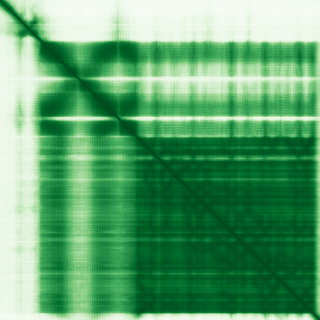
Predicted protein structure

Clinical relevance (Genomics England PanelApp)

Moderate Evidence (Amber)

  • Structural eye disease

    MONOALLELIC, autosomal or pseudoautosomal, NOT imprinted

Disease associations (Open Targets)

  • Abnormality of the skeletal system

    0.28
  • vertebral column disorder

    0.20
  • liver disorder

    0.14
  • esophageal disorder

    0.14
  • musculoskeletal system disorder

    0.14
  • metabolic dysfunction-associated steatotic liver disease

    0.09
  • immune system disorder

    0.08
  • obesity disorder

    0.08
  • obesity due to melanocortin 4 receptor deficiency

    0.08
  • Obesity

    0.08

Score is the Open Targets composite evidence score (0-1). Higher = stronger gene-disease association.

Protein function (UniProt)

Noelin-2

Involved in transforming growth factor beta (TGF-beta)-induced smooth muscle differentiation. TGF-beta induces expression and translocation of OLFM2 to the nucleus where it binds to SRF, causing its dissociation from the transcriptional repressor HEY2/HERP1 and facilitating binding of SRF to target genes (PubMed:25298399). Plays a role in AMPAR complex organization (By similarity). Is a regulator of vascular smooth-muscle cell (SMC) phenotypic switching, that acts by promoting RUNX2 and inhibiting MYOCD binding to SRF. SMC phenotypic switching is the process through which vascular SMCs undergo transition between a quiescent contractile phenotype and a proliferative synthetic phenotype in response to pathological stimuli. SMC phenotypic plasticity is essential for vascular development and remodeling (By similarity)

Data sources: HGNC (CC BY 4.0), AlphaFold (CC BY 4.0, Jumper et al. Nature 2021), Genomics England PanelApp (CC BY 4.0), ClinGen, Open Targets (CC0), UniProt.

Not for sole clinical decision-making. Always verify against primary sources.