
AlphaFold predicted structure
OPA1 · O60313
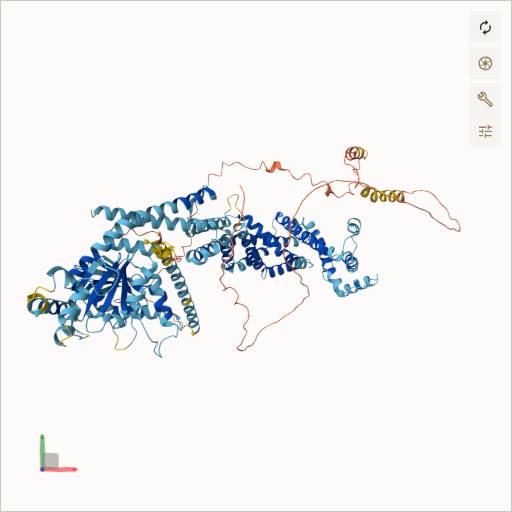
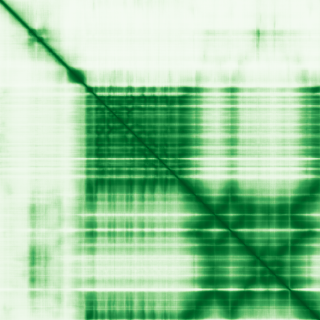
Mean pLDDT
74.0/ 100
Confident
960 residues
Confidence breakdown
- Very high(≥ 90)23%
- Confident(70–90)49%
- Low(50–70)7%
- Very low(< 50)22%
Open interactive 3D viewer
AlphaFold (Jumper et al., 2021) · CC BY 4.0
OPA1 mitochondrial dynamin like GTPase
Annotations refreshed 3 months ago.
Diagnostic Grade (Green)
Ataxia and cerebellar anomalies - narrow panel
BOTH monoallelic and biallelic, autosomal or pseudoautosomalAuditory Neuropathy Spectrum Disorde
MONOALLELIC, autosomal or pseudoautosomal, NOT imprintedHereditary ataxia with onset in adulthood
BOTH monoallelic and biallelic (but BIALLELIC mutations cause a more SEVERE disease form), autosomal or pseudoautosomalHereditary neuropathy
BOTH monoallelic and biallelic, autosomal or pseudoautosomalHereditary neuropathy or pain disorder
BOTH monoallelic and biallelic, autosomal or pseudoautosomalIntellectual disability
MONOALLELIC, autosomal or pseudoautosomal, imprinted status unknownLikely inborn error of metabolism
BOTH monoallelic and biallelic (but BIALLELIC mutations cause a more SEVERE disease form), autosomal or pseudoautosomalMitochondrial disorders
BOTH monoallelic and biallelic (but BIALLELIC mutations cause a more SEVERE disease form), autosomal or pseudoautosomal+9 more panels — install the extension to see the full list inline on any page.
Autosomal dominant optic atrophy, classic type
Behr syndrome
optic atrophy with or without deafness, ophthalmoplegia, myopathy, ataxia, and neuropathy
autosomal dominant optic atrophy, classic form
mitochondrial DNA depletion syndrome 14 (cardioencephalomyopathic type)
optic atrophy
neurodegenerative disease
hereditary disease
Retinal dystrophy
mitochondrial disease
Score is the Open Targets composite evidence score (0-1). Higher = stronger gene-disease association.
Dynamin-like GTPase OPA1, mitochondrial
Dynamin-related GTPase that is essential for normal mitochondrial morphology by mediating fusion of the mitochondrial inner membranes, regulating cristae morphology and maintaining respiratory chain function (PubMed:16778770, PubMed:17709429, PubMed:20185555, PubMed:24616225, PubMed:28628083, PubMed:28746876, PubMed:31922487, PubMed:32228866, PubMed:32567732, PubMed:33130824, PubMed:33237841, PubMed:37612504, PubMed:37612506). Exists in two forms: the transmembrane, long form (Dynamin-like GTPase OPA1, long form; L-OPA1), which is tethered to the inner mitochondrial membrane, and the short soluble form (Dynamin-like GTPase OPA1, short form; S-OPA1), which results from proteolytic cleavage and localizes in the intermembrane space (PubMed:31922487, PubMed:32228866, PubMed:33237841, PubMed:37612504, PubMed:37612506). Both forms (L-OPA1 and S-OPA1) cooperate to catalyze the fusion of the mitochondrial inner membrane (PubMed:31922487, PubMed:37612504, PubMed:37612506). The equilibrium between L-OPA1 and S-OPA1 is essential: excess levels of S-OPA1, produced by cleavage by OMA1 following loss of mitochondrial membrane potential, lead to an impaired equilibrium between L-OPA1 and S-OPA1, inhibiting mitochondrial fusion (PubMed:20038677, PubMed:31922487). The balance between L-OPA1 and S-OPA1 also influences cristae shape and morphology (By similarity). Involved in remodeling cristae and the release of cytochrome c during apoptosis (By similarity). Proteolytic processing by PARL in response to intrinsic apoptotic signals may lead to disassembly of OPA1 oligomers and release of the caspase activator cytochrome C (CYCS) into the mitochondrial intermembrane space (By similarity). Acts as a regulator of T-helper Th17 cells, which are characterized by cells with fused mitochondria with tight cristae, by mediating mitochondrial membrane remodeling: OPA1 is required for interleukin-17 (IL-17) production (By similarity). Its role in mitochondrial morphology is required for mitochondrial genome maintenance (PubMed:18158317, PubMed:20974897)
Curated MONDO disease pages that list OPA1 among their top associated genes.
OPA1 · O60313
Mean pLDDT
74.0/ 100
Confident
960 residues
Confidence breakdown
AlphaFold (Jumper et al., 2021) · CC BY 4.0