
AlphaFold predicted structure
OPA3 · Q9H6K4
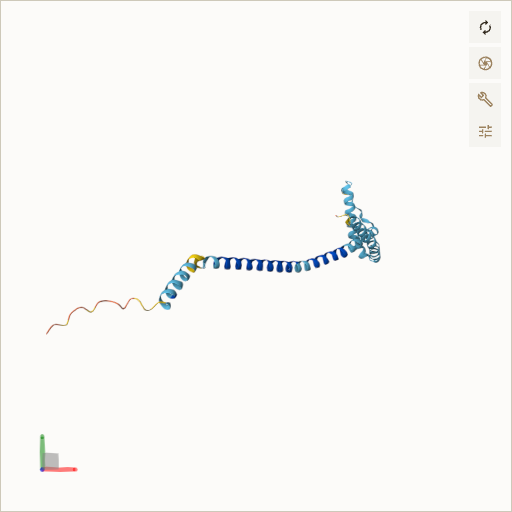
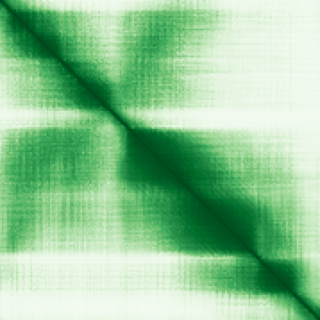
Mean pLDDT
82.6/ 100
Confident
179 residues
Confidence breakdown
- Very high(≥ 90)25%
- Confident(70–90)60%
- Low(50–70)10%
- Very low(< 50)6%
Open interactive 3D viewer
AlphaFold (Jumper et al., 2021) · CC BY 4.0
outer mitochondrial membrane lipid metabolism regulator OPA3
Annotations refreshed 3 months ago.
Diagnostic Grade (Green)
Adult onset hereditary spastic paraplegia
BIALLELIC, autosomal or pseudoautosomalAtaxia and cerebellar anomalies - narrow panel
BIALLELIC, autosomal or pseudoautosomalBilateral congenital or childhood onset cataracts
MONOALLELIC, autosomal or pseudoautosomal, imprinted status unknownChildhood onset dystonia, chorea or related movement disorder
BIALLELIC, autosomal or pseudoautosomalChildhood onset hereditary spastic paraplegia
BIALLELIC, autosomal or pseudoautosomalHereditary ataxia
BIALLELIC, autosomal or pseudoautosomalHereditary ataxia with onset in adulthood
BIALLELIC, autosomal or pseudoautosomalHereditary neuropathy
BOTH monoallelic and biallelic, autosomal or pseudoautosomal+15 more panels — install the extension to see the full list inline on any page.
3-methylglutaconic aciduria type 3
optic atrophy 3
Autosomal dominant optic atrophy and cataract
neurodegenerative disease
autosomal dominant optic atrophy
Cognitive regression
achromatopsia
hereditary disease
alcohol drinking
Abnormal pupillary function
Score is the Open Targets composite evidence score (0-1). Higher = stronger gene-disease association.
Optic atrophy 3 protein
May play some role in mitochondrial processes
Curated MONDO disease pages that list OPA3 among their top associated genes.
OPA3 · Q9H6K4
Mean pLDDT
82.6/ 100
Confident
179 residues
Confidence breakdown
AlphaFold (Jumper et al., 2021) · CC BY 4.0