
AlphaFold predicted structure
OPTN · Q96CV9
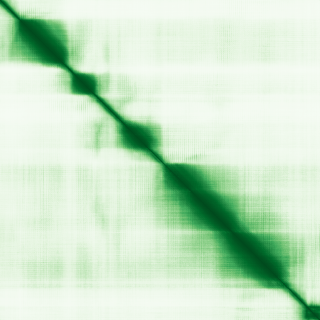
Mean pLDDT
77.3/ 100
Confident
577 residues
Confidence breakdown
- Very high(≥ 90)52%
- Confident(70–90)18%
- Low(50–70)8%
- Very low(< 50)23%
Open interactive 3D viewer
AlphaFold (Jumper et al., 2021) · CC BY 4.0
optineurin
Annotations refreshed 2 months ago.
Diagnostic Grade (Green)
Adult onset neurodegenerative disorder
BOTH monoallelic and biallelic, autosomal or pseudoautosomalAmyotrophic lateral sclerosis/motor neuron disease
BOTH monoallelic and biallelic, autosomal or pseudoautosomalGlaucoma (developmental)
MONOALLELIC, autosomal or pseudoautosomal, imprinted status unknownStructural eye disease
MONOALLELIC, autosomal or pseudoautosomal, NOT imprintedopen-angle glaucoma
amyotrophic lateral sclerosis
familial amyotrophic lateral sclerosis
hereditary disease
motor neuron disorder
bone Paget disease
sarcoidosis
frontotemporal dementia
frontotemporal dementia with motor neuron disease
neurodegenerative disease
Score is the Open Targets composite evidence score (0-1). Higher = stronger gene-disease association.
Optineurin
Plays an important role in the maintenance of the Golgi complex, in membrane trafficking, in exocytosis, through its interaction with myosin VI and Rab8 (PubMed:27534431). Links myosin VI to the Golgi complex and plays an important role in Golgi ribbon formation (PubMed:27534431). Plays a role in the activation of innate immune response during viral infection. Mechanistically, recruits TBK1 at the Golgi apparatus, promoting its trans-phosphorylation after RLR or TLR3 stimulation (PubMed:27538435). In turn, activated TBK1 phosphorylates its downstream partner IRF3 to produce IFN-beta/IFNB1. Plays a neuroprotective role in the eye and optic nerve. May act by regulating membrane trafficking and cellular morphogenesis via a complex that contains Rab8 and huntingtin (HD). Mediates the interaction of Rab8 with the probable GTPase-activating protein TBC1D17 during Rab8-mediated endocytic trafficking, such as that of transferrin receptor (TFRC/TfR); regulates Rab8 recruitment to tubules emanating from the endocytic recycling compartment (PubMed:22854040). Autophagy receptor that interacts directly with both the cargo to become degraded and an autophagy modifier of the MAP1 LC3 family; targets ubiquitin-coated bacteria (xenophagy), such as cytoplasmic Salmonella enterica, and appears to function in the same pathway as SQSTM1 and CALCOCO2/NDP52
Curated MONDO disease pages that list OPTN among their top associated genes.
OPTN · Q96CV9
Mean pLDDT
77.3/ 100
Confident
577 residues
Confidence breakdown
AlphaFold (Jumper et al., 2021) · CC BY 4.0