
AlphaFold predicted structure
ORC6 · Q9Y5N6
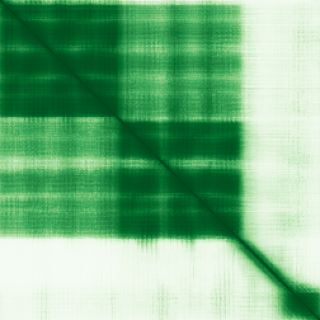
Mean pLDDT
81.8/ 100
Confident
252 residues
Confidence breakdown
- Very high(≥ 90)56%
- Confident(70–90)26%
- Low(50–70)4%
- Very low(< 50)14%
Open interactive 3D viewer
AlphaFold (Jumper et al., 2021) · CC BY 4.0
origin recognition complex subunit 6
Annotations refreshed 2 months ago.
Diagnostic Grade (Green)
DDG2P
BIALLELIC, autosomal or pseudoautosomalDeafness and congenital structural abnormalities
BIALLELIC, autosomal or pseudoautosomalFetal anomalies
BIALLELIC, autosomal or pseudoautosomalIUGR and IGF abnormalities
BIALLELIC, autosomal or pseudoautosomalSevere microcephaly
BIALLELIC, autosomal or pseudoautosomalSkeletal dysplasia
BIALLELIC, autosomal or pseudoautosomalIntellectual disability
BIALLELIC, autosomal or pseudoautosomalMonogenic short stature
BIALLELIC, autosomal or pseudoautosomalEar-patella-short stature syndrome
neurodegenerative disease
Meier-Gorlin syndrome
microcephalic primordial dwarfism
hereditary disease
neoplasm
cancer
central nervous system cancer
glioma
non-small cell lung carcinoma
Score is the Open Targets composite evidence score (0-1). Higher = stronger gene-disease association.
Origin recognition complex subunit 6
Component of the origin recognition complex (ORC) that binds origins of replication. DNA-binding is ATP-dependent. The specific DNA sequences that define origins of replication have not been identified yet. ORC is required to assemble the pre-replication complex necessary to initiate DNA replication. Does not bind histone H3 and H4 trimethylation marks H3K9me3, H3K27me3 and H4K20me3
ORC6 · Q9Y5N6
Mean pLDDT
81.8/ 100
Confident
252 residues
Confidence breakdown
AlphaFold (Jumper et al., 2021) · CC BY 4.0