
AlphaFold predicted structure
OVOL2 · Q9BRP0
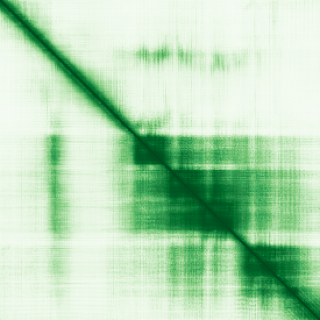
Mean pLDDT
60.8/ 100
Low
275 residues
Confidence breakdown
- Very high(≥ 90)0%
- Confident(70–90)47%
- Low(50–70)15%
- Very low(< 50)38%
Open interactive 3D viewer
AlphaFold (Jumper et al., 2021) · CC BY 4.0
ovo like zinc finger 2
Annotations refreshed 2 months ago.
Diagnostic Grade (Green)
Corneal abnormalities
MONOALLELIC, autosomal or pseudoautosomal, NOT imprintedCorneal dystrophy
MONOALLELIC, autosomal or pseudoautosomal, NOT imprintedposterior polymorphous corneal dystrophy 1
posterior polymorphous corneal dystrophy
DNA methylation
breast cancer
breast carcinoma
cancer
hepatocellular carcinoma
nasopharyngeal carcinoma
non-small cell lung carcinoma
neoplasm
Score is the Open Targets composite evidence score (0-1). Higher = stronger gene-disease association.
Transcription factor Ovo-like 2
Zinc-finger transcription repressor factor (PubMed:19700410). Plays a critical role in maintaining the identity of epithelial lineages by suppressing epithelial-to mesenchymal transition (EMT) mainly through the repression of ZEB1, an EMT inducer (By similarity). Positively regulates neuronal differentiation (By similarity). Suppresses cell cycling and terminal differentiation of keratinocytes by directly repressing MYC and NOTCH1 (PubMed:19700410). Important for the correct development of primordial germ cells in embryos (By similarity). Plays dual functions in thermogenesis and adipogenesis to maintain energy balance. Essential for brown/beige adipose tissue-mediated thermogenesis, is necessary for the development of brown adipocytes. In white adipose tissues, limits adipogenesis by blocking CEBPA binding to its transcriptional targets and inhibiting its transcription factor activity (By similarity)
Curated MONDO disease pages that list OVOL2 among their top associated genes.
OVOL2 · Q9BRP0
Mean pLDDT
60.8/ 100
Low
275 residues
Confidence breakdown
AlphaFold (Jumper et al., 2021) · CC BY 4.0