
AlphaFold predicted structure
P3H1 · Q32P28
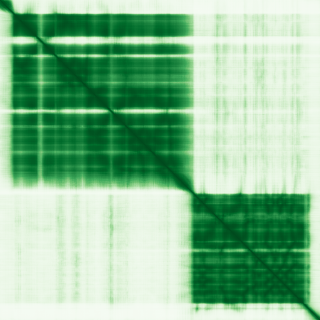
Mean pLDDT
85.8/ 100
Confident
736 residues
Confidence breakdown
- Very high(≥ 90)64%
- Confident(70–90)21%
- Low(50–70)8%
- Very low(< 50)7%
Open interactive 3D viewer
AlphaFold (Jumper et al., 2021) · CC BY 4.0
prolyl 3-hydroxylase 1
Annotations refreshed 2 months ago.
Diagnostic Grade (Green)
DDG2P
BIALLELIC, autosomal or pseudoautosomalFetal anomalies
BIALLELIC, autosomal or pseudoautosomalOsteogenesis imperfecta
BIALLELIC, autosomal or pseudoautosomalSkeletal dysplasia
BIALLELIC, autosomal or pseudoautosomalIntellectual disability
BIALLELIC, autosomal or pseudoautosomalosteogenesis imperfecta type 8
osteogenesis imperfecta
osteogenesis imperfecta type 3
osteogenesis imperfecta, recessive
osteogenesis imperfecta type 2
skeletal dysplasia
hereditary disease
mixed connective tissue disease
long QT syndrome 12
neoplasm
Score is the Open Targets composite evidence score (0-1). Higher = stronger gene-disease association.
Prolyl 3-hydroxylase 1
Has prolyl 3-hydroxylase activity and catalyzes the post-translational formation of 3-hydroxyproline in -Xaa-Pro-Gly- sequences in pro-collagen chains, a critical step for the formation of mature collagen trimers (PubMed:39245686). May be involved in the secretory pathway of cells. Has growth suppressive activity in fibroblasts
P3H1 · Q32P28
Mean pLDDT
85.8/ 100
Confident
736 residues
Confidence breakdown
AlphaFold (Jumper et al., 2021) · CC BY 4.0