
AlphaFold predicted structure
P4HB · P07237
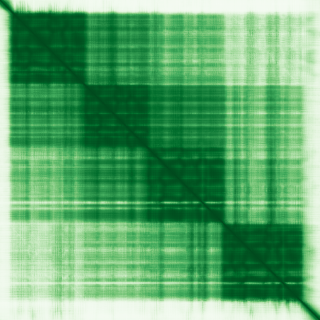
Mean pLDDT
88.5/ 100
Confident
508 residues
Confidence breakdown
- Very high(≥ 90)71%
- Confident(70–90)20%
- Low(50–70)1%
- Very low(< 50)9%
Open interactive 3D viewer
AlphaFold (Jumper et al., 2021) · CC BY 4.0
prolyl 4-hydroxylase subunit beta
Annotations refreshed 3 months ago.
Diagnostic Grade (Green)
DDG2P
MONOALLELIC, autosomal or pseudoautosomal, imprinted status unknownFetal anomalies
MONOALLELIC, autosomal or pseudoautosomal, imprinted status unknownOsteogenesis imperfecta
MONOALLELIC, autosomal or pseudoautosomal, NOT imprintedRare syndromic craniosynostosis or isolated multisuture synostosis
MONOALLELIC, autosomal or pseudoautosomal, NOT imprintedSkeletal dysplasia
MONOALLELIC, autosomal or pseudoautosomal, NOT imprintedHydrocephalus
MONOALLELIC, autosomal or pseudoautosomal, imprinted status unknownIntellectual disability
MONOALLELIC, autosomal or pseudoautosomal, NOT imprintedCole-Carpenter syndrome
Hypercholesterolemia
familial hypercholesterolemia
dengue disease
cardiovascular disorder
osteogenesis imperfecta type 1
homozygous familial hypercholesterolemia
hereditary disease
osteogenesis imperfecta
breast cancer
Score is the Open Targets composite evidence score (0-1). Higher = stronger gene-disease association.
Protein disulfide-isomerase
This multifunctional protein catalyzes the formation, breakage and rearrangement of disulfide bonds. At the cell surface, seems to act as a reductase that cleaves disulfide bonds of proteins attached to the cell. May therefore cause structural modifications of exofacial proteins. Inside the cell, seems to form/rearrange disulfide bonds of nascent proteins. At high concentrations and following phosphorylation by FAM20C, functions as a chaperone that inhibits aggregation of misfolded proteins (PubMed:32149426). At low concentrations, facilitates aggregation (anti-chaperone activity). May be involved with other chaperones in the structural modification of the TG precursor in hormone biogenesis. Also acts as a structural subunit of various enzymes such as prolyl 4-hydroxylase and microsomal triacylglycerol transfer protein MTTP. Receptor for LGALS9; the interaction retains P4HB at the cell surface of Th2 T helper cells, increasing disulfide reductase activity at the plasma membrane, altering the plasma membrane redox state and enhancing cell migration (PubMed:21670307)
P4HB · P07237
Mean pLDDT
88.5/ 100
Confident
508 residues
Confidence breakdown
AlphaFold (Jumper et al., 2021) · CC BY 4.0