
AlphaFold predicted structure
PACS1 · Q6VY07
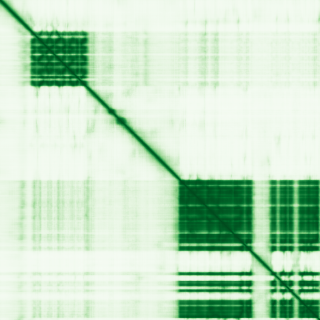
Mean pLDDT
64.8/ 100
Low
963 residues
Confidence breakdown
- Very high(≥ 90)31%
- Confident(70–90)17%
- Low(50–70)9%
- Very low(< 50)43%
Open interactive 3D viewer
AlphaFold (Jumper et al., 2021) · CC BY 4.0
phosphofurin acidic cluster sorting protein 1
Annotations refreshed 2 months ago.
Diagnostic Grade (Green)
DDG2P
MONOALLELIC, autosomal or pseudoautosomal, imprinted status unknownEarly onset or syndromic epilepsy
MONOALLELIC, autosomal or pseudoautosomal, imprinted status unknownFetal anomalies
MONOALLELIC, autosomal or pseudoautosomal, NOT imprintedIntellectual disability
MONOALLELIC, autosomal or pseudoautosomal, NOT imprintedStructural eye disease
MONOALLELIC, autosomal or pseudoautosomal, imprinted status unknownSchuurs-Hoeijmakers syndrome
Intellectual disability - craniofacial dysmorphism - cryptorchidism
Intellectual disability
HIV infectious disease
hereditary disease
neurodevelopmental disorder
Global developmental delay
gout
neurodegenerative disease
bipolar I disorder
Score is the Open Targets composite evidence score (0-1). Higher = stronger gene-disease association.
Phosphofurin acidic cluster sorting protein 1
Coat protein that is involved in the localization of trans-Golgi network (TGN) membrane proteins that contain acidic cluster sorting motifs. Controls the endosome-to-Golgi trafficking of furin and mannose-6-phosphate receptor by connecting the acidic-cluster-containing cytoplasmic domain of these molecules with the adapter-protein complex-1 (AP-1) of endosomal clathrin-coated membrane pits. Involved in HIV-1 nef-mediated removal of MHC-I from the cell surface to the TGN. Required for normal ER Ca2+ handling in lymphocytes. Together with WDR37, it plays an essential role in lymphocyte development, quiescence and survival. Required for stabilizing peripheral lymphocyte populations (By similarity)
PACS1 · Q6VY07
Mean pLDDT
64.8/ 100
Low
963 residues
Confidence breakdown
AlphaFold (Jumper et al., 2021) · CC BY 4.0