
AlphaFold predicted structure
PACS2 · Q86VP3
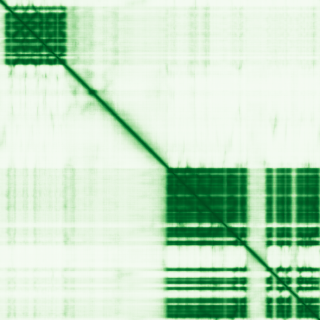
Mean pLDDT
66.3/ 100
Low
889 residues
Confidence breakdown
- Very high(≥ 90)35%
- Confident(70–90)14%
- Low(50–70)10%
- Very low(< 50)41%
Open interactive 3D viewer
AlphaFold (Jumper et al., 2021) · CC BY 4.0
phosphofurin acidic cluster sorting protein 2
Annotations refreshed 3 months ago.
Diagnostic Grade (Green)
DDG2P
MONOALLELIC, autosomal or pseudoautosomal, imprinted status unknownEarly onset or syndromic epilepsy
MONOALLELIC, autosomal or pseudoautosomal, imprinted status unknownFetal anomalies
MONOALLELIC, autosomal or pseudoautosomal, NOT imprintedHereditary ataxia with onset in adulthood
MONOALLELIC, autosomal or pseudoautosomal, NOT imprintedIntellectual disability
MONOALLELIC, autosomal or pseudoautosomal, imprinted status unknowndevelopmental and epileptic encephalopathy, 66
Seizure
Intellectual disability
hereditary disease
neurodevelopmental disorder
Global developmental delay
genetic developmental and epileptic encephalopathy
Spasticity - intellectual disability - X-linked epilepsy
developmental and epileptic encephalopathy, 1
undetermined early-onset epileptic encephalopathy
Score is the Open Targets composite evidence score (0-1). Higher = stronger gene-disease association.
Phosphofurin acidic cluster sorting protein 2
Multifunctional sorting protein that controls the endoplasmic reticulum (ER)-mitochondria communication, including the apposition of mitochondria with the ER and ER homeostasis. In addition, in response to apoptotic inducer, translocates BIB to mitochondria, which initiates a sequence of events including the formation of mitochondrial truncated BID, the release of cytochrome c, the activation of caspase-3 thereby causing cell death. May also be involved in ion channel trafficking, directing acidic cluster-containing ion channels to distinct subcellular compartments
PACS2 · Q86VP3
Mean pLDDT
66.3/ 100
Low
889 residues
Confidence breakdown
AlphaFold (Jumper et al., 2021) · CC BY 4.0