AlphaFold predicted structure
PAFAH1B1 · P43034
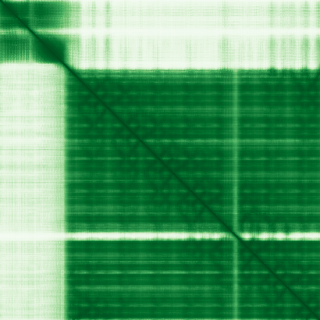
Mean pLDDT
90.3/ 100
Very high
410 residues
Confidence breakdown
- Very high(≥ 90)67%
- Confident(70–90)26%
- Low(50–70)6%
- Very low(< 50)2%
AlphaFold (Jumper et al., 2021) · CC BY 4.0
platelet activating factor acetylhydrolase 1b regulatory subunit 1
Annotations refreshed 10 hours ago.
Diagnostic Grade (Green)
DDG2P
MONOALLELIC, autosomal or pseudoautosomal, imprinted status unknownEarly onset or syndromic epilepsy
MONOALLELIC, autosomal or pseudoautosomal, imprinted status unknownFetal anomalies
MONOALLELIC, autosomal or pseudoautosomal, imprinted status unknownInherited white matter disorders
MONOALLELIC, autosomal or pseudoautosomal, imprinted status unknownIntellectual disability
MONOALLELIC, autosomal or pseudoautosomal, NOT imprintedMalformations of cortical development
MONOALLELIC, autosomal or pseudoautosomal, imprinted status unknownWhite matter disorders and cerebral calcification - narrow panel
MONOALLELIC, autosomal or pseudoautosomal, imprinted status unknownCerebral vascular malformations
lissencephaly due to LIS1 mutation
subcortical band heterotopia
classic lissencephaly
Lissencephaly
hereditary disease
Intellectual disability
neurodegenerative disease
lissencephaly spectrum disorders
Miller-Dieker lissencephaly syndrome
Abnormality of the skeletal system
Score is the Open Targets composite evidence score (0-1). Higher = stronger gene-disease association.
Platelet-activating factor acetylhydrolase IB subunit beta
Regulatory subunit (beta subunit) of the cytosolic type I platelet-activating factor (PAF) acetylhydrolase (PAF-AH (I)), an enzyme that catalyzes the hydrolyze of the acetyl group at the sn-2 position of PAF and its analogs and participates in PAF inactivation. Regulates the PAF-AH (I) activity in a catalytic dimer composition-dependent manner (By similarity). Required for proper activation of Rho GTPases and actin polymerization at the leading edge of locomoting cerebellar neurons and postmigratory hippocampal neurons in response to calcium influx triggered via NMDA receptors (By similarity). Positively regulates the activity of the minus-end directed microtubule motor protein dynein. May enhance dynein-mediated microtubule sliding by targeting dynein to the microtubule plus end. Required for several dynein- and microtubule-dependent processes such as the maintenance of Golgi integrity, the peripheral transport of microtubule fragments and the coupling of the nucleus and centrosome. Required during brain development for the proliferation of neuronal precursors and the migration of newly formed neurons from the ventricular/subventricular zone toward the cortical plate. Neuronal migration involves a process called nucleokinesis, whereby migrating cells extend an anterior process into which the nucleus subsequently translocates. During nucleokinesis dynein at the nuclear surface may translocate the nucleus towards the centrosome by exerting force on centrosomal microtubules. May also play a role in other forms of cell locomotion including the migration of fibroblasts during wound healing. Required for dynein recruitment to microtubule plus ends and BICD2-bound cargos (PubMed:22956769). May modulate the Reelin pathway through interaction of the PAF-AH (I) catalytic dimer with VLDLR (By similarity)
PAFAH1B1 · P43034

Mean pLDDT
90.3/ 100
Very high
410 residues
Confidence breakdown
AlphaFold (Jumper et al., 2021) · CC BY 4.0