AlphaFold predicted structure
PAPSS2 · O95340
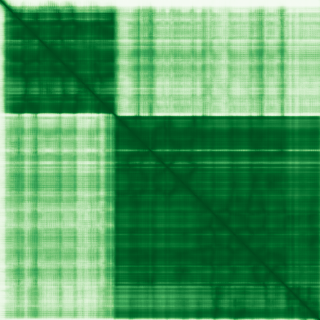
Mean pLDDT
92.2/ 100
Very high
614 residues
Confidence breakdown
- Very high(≥ 90)80%
- Confident(70–90)16%
- Low(50–70)2%
- Very low(< 50)2%
AlphaFold (Jumper et al., 2021) · CC BY 4.0
3'-phosphoadenosine 5'-phosphosulfate synthase 2
Annotations refreshed 9 hours ago.
Diagnostic Grade (Green)
DDG2P
BIALLELIC, autosomal or pseudoautosomalFetal anomalies
BIALLELIC, autosomal or pseudoautosomalSkeletal dysplasia
BIALLELIC, autosomal or pseudoautosomalIntellectual disability
BIALLELIC, autosomal or pseudoautosomalOsteogenesis imperfecta
spondyloepimetaphyseal dysplasia, PAPSS2 type
Spondyloepimetaphyseal dysplasia, Pakistani type
hereditary disease
Spondyloepiphyseal dysplasia and spondyloepimetaphyseal dysplasia
autosomal recessive brachyolmia
skeletal dysplasia
urinary tract obstruction
brachyolmia
hypothyroidism
migraine disorder
Score is the Open Targets composite evidence score (0-1). Higher = stronger gene-disease association.
Bifunctional 3'-phosphoadenosine 5'-phosphosulfate synthase 2
Bifunctional enzyme with both ATP sulfurylase and APS kinase activity, which mediates two steps in the sulfate activation pathway. The first step is the transfer of a sulfate group to ATP to yield adenosine 5'-phosphosulfate (APS), and the second step is the transfer of a phosphate group from ATP to APS yielding 3'-phosphoadenylylsulfate/PAPS, the activated sulfate donor used by sulfotransferases (PubMed:11773860, PubMed:19474428, PubMed:23824674, PubMed:25594860). In mammals, PAPS is the sole source of sulfate while APS appears to only be an intermediate in the sulfate-activation pathway (PubMed:11773860, PubMed:19474428, PubMed:23824674, PubMed:25594860). Plays indirectly an important role in skeletogenesis during postnatal growth (PubMed:9771708)
PAPSS2 · O95340

Mean pLDDT
92.2/ 100
Very high
614 residues
Confidence breakdown
AlphaFold (Jumper et al., 2021) · CC BY 4.0