
AlphaFold predicted structure
PATJ · Q8NI35
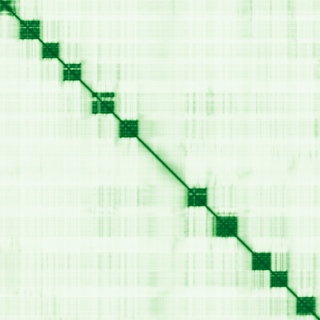
Mean pLDDT
61.0/ 100
Low
1,801 residues
Confidence breakdown
- Very high(≥ 90)9%
- Confident(70–90)42%
- Low(50–70)8%
- Very low(< 50)41%
Open interactive 3D viewer
AlphaFold (Jumper et al., 2021) · CC BY 4.0
PATJ crumbs cell polarity complex component
Annotations refreshed 2 months ago.
Moderate Evidence (Amber)
Fetal anomalies
BIALLELIC, autosomal or pseudoautosomalAbnormality of the skeletal system
type 2 diabetes mellitus
obesity disorder
hypertensive disorder
essential hypertension
circadian rhythm
placental abruption
narcolepsy without cataplexy
Sjogren syndrome
Graves disease
Score is the Open Targets composite evidence score (0-1). Higher = stronger gene-disease association.
InaD-like protein
Scaffolding protein that facilitates the localization of proteins to the cell membrane (PubMed:11927608, PubMed:16678097, PubMed:22006950). Required for the correct formation of tight junctions and epithelial apico-basal polarity (PubMed:11927608, PubMed:16678097). Acts (via its L27 domain) as an apical connector and elongation factor for multistranded TJP1/ZO1 condensates that form a tight junction belt, thereby required for the formation of the tight junction-mediated cell barrier (By similarity). Positively regulates epithelial cell microtubule elongation and cell migration, possibly via facilitating localization of PRKCI/aPKC and PAR3D/PAR3 at the leading edge of migrating cells (By similarity). Plays a role in the correct reorientation of the microtubule-organizing center during epithelial migration (By similarity). May regulate the surface expression and/or function of ASIC3 in sensory neurons (By similarity). May recruit ARHGEF18 to apical cell-cell boundaries (PubMed:22006950)
PATJ · Q8NI35
Mean pLDDT
61.0/ 100
Low
1,801 residues
Confidence breakdown
AlphaFold (Jumper et al., 2021) · CC BY 4.0