
AlphaFold predicted structure
PDE6B · P35913
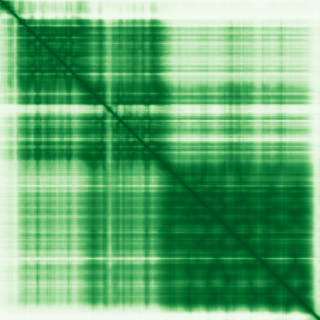
Mean pLDDT
89.3/ 100
Confident
854 residues
Confidence breakdown
- Very high(≥ 90)72%
- Confident(70–90)20%
- Low(50–70)3%
- Very low(< 50)5%
Open interactive 3D viewer
AlphaFold (Jumper et al., 2021) · CC BY 4.0
phosphodiesterase 6B
Annotations refreshed 2 months ago.
Diagnostic Grade (Green)
Retinal disorders
BOTH monoallelic and biallelic, autosomal or pseudoautosomalGlaucoma (developmental)
Structural eye disease
BOTH monoallelic and biallelic, autosomal or pseudoautosomalretinitis pigmentosa
congenital stationary night blindness
Retinal dystrophy
coronary artery disorder
stroke disorder
autosomal recessive retinitis pigmentosa
cardiovascular disorder
intermittent vascular claudication
Posterior column ataxia - retinitis pigmentosa
inherited retinal dystrophy
Score is the Open Targets composite evidence score (0-1). Higher = stronger gene-disease association.
Rod cGMP-specific 3',5'-cyclic phosphodiesterase subunit beta
Catalytic beta subunit of the rod-specific cGMP phosphodiesterase (PDE6) complex, which hydrolyzes 3',5'-cyclic GMP in the phototransduction cascade. The PDE6 holoenzyme consists of two catalytic subunits (PDE6A and PDE6B) and two inhibitory gamma subunits (PDE6G) (PubMed:20940301). Light-activated GNAT1 relieves gamma subunit-mediated inhibition, enabling the catalytic subunits to hydrolyze cGMP and thereby mediate visual signal transduction and amplification (PubMed:8394174). Decreased cytosolic cGMP levels result in closure of cGMP-gated cation channels at the plasma membrane, leading to rod photoreceptor hyperpolarization (Probable). Involved in retinal circadian rhythm photoentrainment via modulation of UVA and orange light-induced phase-shift of the retina clock (By similarity)
Curated MONDO disease pages that list PDE6B among their top associated genes.
PDE6B · P35913
Mean pLDDT
89.3/ 100
Confident
854 residues
Confidence breakdown
AlphaFold (Jumper et al., 2021) · CC BY 4.0