
AlphaFold predicted structure
PDIA6 · Q15084
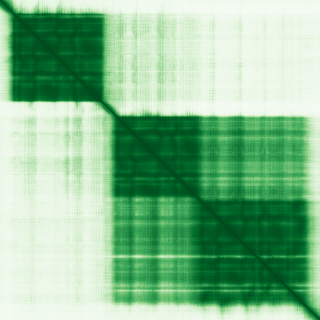
Mean pLDDT
86.8/ 100
Confident
440 residues
Confidence breakdown
- Very high(≥ 90)65%
- Confident(70–90)22%
- Low(50–70)6%
- Very low(< 50)7%
Open interactive 3D viewer
AlphaFold (Jumper et al., 2021) · CC BY 4.0
protein disulfide isomerase family A member 6
Annotations refreshed 2 months ago.
Diagnostic Grade (Green)
Fetal anomalies
BIALLELIC, autosomal or pseudoautosomalCystic kidney disease
BIALLELIC, autosomal or pseudoautosomalNeonatal diabetes
BIALLELIC, autosomal or pseudoautosomalRenal ciliopathies
BIALLELIC, autosomal or pseudoautosomalSkeletal ciliopathies
BIALLELIC, autosomal or pseudoautosomalSkeletal dysplasia
BIALLELIC, autosomal or pseudoautosomalDDG2P
BIALLELIC, autosomal or pseudoautosomalneurodegenerative disease
mathematical ability
diabetes mellitus
microcephaly
Meckel syndrome
Polycystic kidney dysplasia
spondylolisthesis
immune system disorder
skin disorder
pachyonychia congenita
Score is the Open Targets composite evidence score (0-1). Higher = stronger gene-disease association.
Protein disulfide-isomerase A6
May function as a chaperone that inhibits aggregation of misfolded proteins (PubMed:12204115). Negatively regulates the unfolded protein response (UPR) through binding to UPR sensors such as ERN1, which in turn inactivates ERN1 signaling (PubMed:24508390). May also regulate the UPR via the EIF2AK3 UPR sensor (PubMed:24508390). Plays a role in platelet aggregation and activation by agonists such as convulxin, collagen and thrombin (PubMed:15466936)
PDIA6 · Q15084
Mean pLDDT
86.8/ 100
Confident
440 residues
Confidence breakdown
AlphaFold (Jumper et al., 2021) · CC BY 4.0