
AlphaFold predicted structure
PDYN · P01213
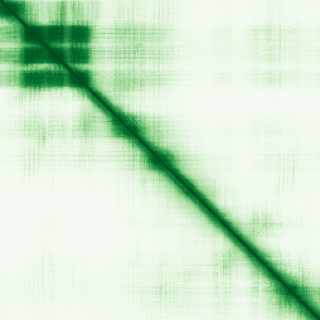
Mean pLDDT
58.7/ 100
Low
254 residues
Confidence breakdown
- Very high(≥ 90)2%
- Confident(70–90)20%
- Low(50–70)43%
- Very low(< 50)35%
Open interactive 3D viewer
AlphaFold (Jumper et al., 2021) · CC BY 4.0
prodynorphin
Annotations refreshed 2 months ago.
Diagnostic Grade (Green)
Ataxia and cerebellar anomalies - narrow panel
MONOALLELIC, autosomal or pseudoautosomal, imprinted status unknownHereditary ataxia
MONOALLELIC, autosomal or pseudoautosomal, imprinted status unknownHereditary neuropathy or pain disorder
MONOALLELIC, autosomal or pseudoautosomal, NOT imprintedChildhood onset dystonia, chorea or related movement disorder
Hereditary neuropathy
MONOALLELIC, autosomal or pseudoautosomal, NOT imprintedAdult onset neurodegenerative disorder
MONOALLELIC, autosomal or pseudoautosomal, imprinted status unknownHereditary ataxia with onset in adulthood
MONOALLELIC, autosomal or pseudoautosomal, imprinted status unknownIntellectual disability
MONOALLELIC, autosomal or pseudoautosomal, imprinted status unknownspinocerebellar ataxia type 23
rectosigmoid junction neoplasm
neurodegenerative disease
hereditary disease
thrombocytopenia 4
hemorrhagic disease
Anxiety
polycystic ovary syndrome
alcohol dependence
alcohol drinking
Score is the Open Targets composite evidence score (0-1). Higher = stronger gene-disease association.
Proenkephalin-B
Leu-enkephalins compete with and mimic the effects of opiate drugs. They play a role in a number of physiologic functions, including pain perception and responses to stress (By similarity)
PDYN · P01213
Mean pLDDT
58.7/ 100
Low
254 residues
Confidence breakdown
AlphaFold (Jumper et al., 2021) · CC BY 4.0