
AlphaFold predicted structure
PEX5 · P50542
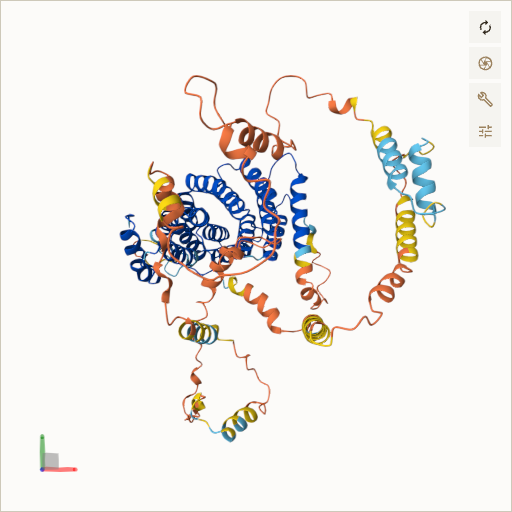
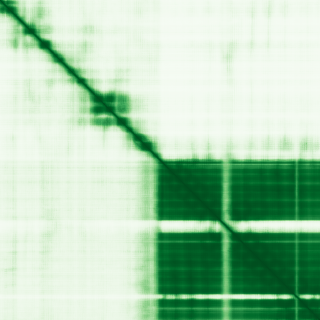
Mean pLDDT
69.9/ 100
Low
639 residues
Confidence breakdown
- Very high(≥ 90)41%
- Confident(70–90)11%
- Low(50–70)15%
- Very low(< 50)33%
Open interactive 3D viewer
AlphaFold (Jumper et al., 2021) · CC BY 4.0
peroxisomal biogenesis factor 5
Annotations refreshed 3 months ago.
Diagnostic Grade (Green)
Adult onset leukodystrophy
BIALLELIC, autosomal or pseudoautosomalArthrogryposis
BIALLELIC, autosomal or pseudoautosomalBilateral congenital or childhood onset cataracts
BIALLELIC, autosomal or pseudoautosomalDDG2P
BIALLELIC, autosomal or pseudoautosomalFetal anomalies
BIALLELIC, autosomal or pseudoautosomalFetal hydrops
BIALLELIC, autosomal or pseudoautosomalInherited white matter disorders
BIALLELIC, autosomal or pseudoautosomalIntellectual disability
BIALLELIC, autosomal or pseudoautosomal+11 more panels — install the extension to see the full list inline on any page.
peroxisome biogenesis disorder 2A (Zellweger)
Zellweger syndrome
peroxisome biogenesis disorder 2B
Zellweger spectrum disorders
rhizomelic chondrodysplasia punctata type 5
Peroxisome biogenesis disorder-Zellweger syndrome spectrum
peroxisome biogenesis disorder
peroxisomal disease
peroxisome biogenesis disorder 1A (Zellweger)
peroxisome biogenesis disorder type 3B
Score is the Open Targets composite evidence score (0-1). Higher = stronger gene-disease association.
Peroxisomal targeting signal 1 receptor
Receptor that mediates peroxisomal import of proteins containing a C-terminal PTS1-type tripeptide peroxisomal targeting signal (SKL-type) (PubMed:11101887, PubMed:11336669, PubMed:12456682, PubMed:16314507, PubMed:17157249, PubMed:17428317, PubMed:21976670, PubMed:26344566, PubMed:7706321, PubMed:7719337, PubMed:7790377). Binds to cargo proteins containing a PTS1 peroxisomal targeting signal in the cytosol, and translocates them into the peroxisome matrix by passing through the PEX13-PEX14 docking complex along with cargo proteins (PubMed:12456682, PubMed:17157249, PubMed:21976670, PubMed:26344566). PEX5 receptor is then retrotranslocated into the cytosol, leading to release of bound cargo in the peroxisome matrix, and reset for a subsequent peroxisome import cycle (PubMed:11336669, PubMed:24662292)
PEX5 · P50542
Mean pLDDT
69.9/ 100
Low
639 residues
Confidence breakdown
AlphaFold (Jumper et al., 2021) · CC BY 4.0