
AlphaFold predicted structure
PHYH · O14832
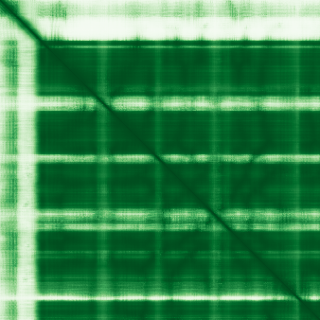
Mean pLDDT
85.4/ 100
Confident
338 residues
Confidence breakdown
- Very high(≥ 90)66%
- Confident(70–90)17%
- Low(50–70)5%
- Very low(< 50)12%
Open interactive 3D viewer
AlphaFold (Jumper et al., 2021) · CC BY 4.0
phytanoyl-CoA 2-hydroxylase
Annotations refreshed 2 months ago.
Diagnostic Grade (Green)
Hereditary neuropathy
BIALLELIC, autosomal or pseudoautosomalHereditary neuropathy or pain disorder
BIALLELIC, autosomal or pseudoautosomalLikely inborn error of metabolism
BIALLELIC, autosomal or pseudoautosomalPeroxisomal disorders
BIALLELIC, autosomal or pseudoautosomalRetinal disorders
BIALLELIC, autosomal or pseudoautosomalUndiagnosed metabolic disorders
BIALLELIC, autosomal or pseudoautosomalChildhood onset dystonia, chorea or related movement disorder
Glaucoma (developmental)
+2 more panels — install the extension to see the full list inline on any page.
Refsum disease
adult Refsum disease
Retinal dystrophy
retinitis pigmentosa
hereditary disease
phytanoyl-CoA hydroxylase deficiency
eye disorder
orofacial cleft
alcohol drinking
vibrio infectious disease
Score is the Open Targets composite evidence score (0-1). Higher = stronger gene-disease association.
Phytanoyl-CoA dioxygenase, peroxisomal
Catalyzes the 2-hydroxylation of not only racemic phytanoyl-CoA and the isomers of 3-methylhexadecanoyl-CoA, but also a variety of other mono-branched 3-methylacyl-CoA esters (with a chain length of at least seven carbon atoms) and straight-chain acyl-CoA esters (with a chain length longer than four carbon atoms) (PubMed:10744784, PubMed:12031666, PubMed:12923223, PubMed:9326939). Does not hydroxylate long and very long straight chain acyl-CoAs or 2-methyl- and 4-methyl-branched acyl-CoAs (PubMed:10744784, PubMed:12923223)
PHYH · O14832
Mean pLDDT
85.4/ 100
Confident
338 residues
Confidence breakdown
AlphaFold (Jumper et al., 2021) · CC BY 4.0