Arthrogryposis with oculomotor limitation and electroretinal anomalies
0.71
Marden-Walker syndrome
0.67
hereditary disease
0.53
arthrogryposis multiplex congenita
0.46
fetal akinesia deformation sequence 1
0.45
diverticular disease
0.42
neurodegenerative disease
0.40
Score is the Open Targets composite evidence score (0-1). Higher = stronger gene-disease association.
Protein function (UniProt)
Piezo-type mechanosensitive ion channel component 2
Pore-forming subunit of the mechanosensitive non-specific cation Piezo channel required for rapidly adapting mechanically activated (MA) currents and has a key role in sensing touch and tactile pain (PubMed:37590348). Piezo channels are homotrimeric three-blade propeller-shaped structures that utilize a cap-motion and plug-and-latch mechanism to gate their ion-conducting pathways (PubMed:37590348). Expressed in sensory neurons, is essential for diverse physiological processes, including respiratory control, systemic metabolism, urinary function, and proprioception (By similarity). Mediates airway stretch sensing, enabling efficient respiration at birth and maintaining normal breathing in adults (By similarity). It regulates brown and beige adipose tissue morphology and function, preventing systemic hypermetabolism (By similarity). In the lower urinary tract, acts as a sensor in both the bladder urothelium and innervating sensory neurons being required for bladder-stretch sensing and urethral micturition reflexes, ensuring proper urinary function (PubMed:33057202). Additionally, PIEZO2 serves as the principal mechanotransducer in proprioceptors, facilitating proprioception and coordinated body movements (By similarity). In inner ear hair cells, PIEZO1/2 subunits may constitute part of the mechanotransducer (MET) non-selective cation channel complex where they may act as pore-forming ion-conducting component in the complex (By similarity). Required for Merkel-cell mechanotransduction (By similarity). Plays a major role in light-touch mechanosensation (By similarity). In kidney, during blood volume challenges, regulates calcium dynamics and maintains renin production, thereby serving as an essential regulator of the renin-angiotensin-aldosterone system (RAAS) and systemic blood volume control (By similarity)
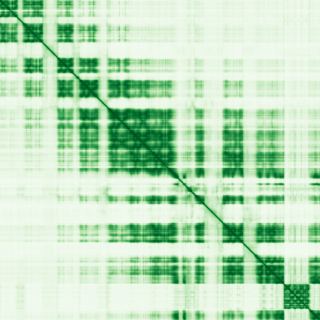
AlphaFold predicted structure
PIEZO2 ·Q9H5I5-2isoform
No predicted structure exists for the canonical Q9H5I5 sequence; metrics below describe this isoform.