
AlphaFold predicted structure
PIGK · Q92643
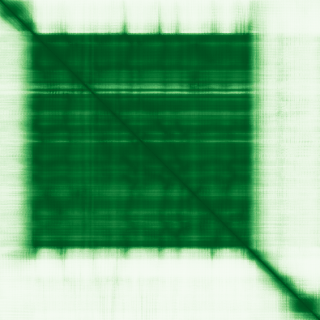
Mean pLDDT
85.1/ 100
Confident
395 residues
Confidence breakdown
- Very high(≥ 90)64%
- Confident(70–90)12%
- Low(50–70)19%
- Very low(< 50)5%
Open interactive 3D viewer
AlphaFold (Jumper et al., 2021) · CC BY 4.0
phosphatidylinositol glycan anchor biosynthesis class K
Annotations refreshed 2 months ago.
Diagnostic Grade (Green)
DDG2P
BIALLELIC, autosomal or pseudoautosomalEarly onset or syndromic epilepsy
BIALLELIC, autosomal or pseudoautosomalFetal anomalies
BIALLELIC, autosomal or pseudoautosomalIntellectual disability
BIALLELIC, autosomal or pseudoautosomalneurodevelopmental disorder with hypotonia and cerebellar atrophy, with or without seizures
neurodegenerative disease
circadian rhythm
Abnormal pupillary function
ocular hypotension
Abnormal nasolacrimal system morphology
Abnormality of limbs
jaw disease
Abnormality of the immune system
hereditary disease
Score is the Open Targets composite evidence score (0-1). Higher = stronger gene-disease association.
GPI-anchor transamidase
Catalytic subunit of the glycosylphosphatidylinositol-anchor (GPI-anchor) transamidase (GPI-T) complex that catalyzes the formation of the linkage between a proprotein and a GPI-anchor and participates in GPI anchored protein biosynthesis (PubMed:10793132, PubMed:11483512, PubMed:12582175, PubMed:34576938, PubMed:35165458, PubMed:35551457, PubMed:37684232, PubMed:9356492). Recognizes diverse proproteins at a C-terminal signal peptide (CSP) region that lacks consensus sequence and replaces it with a GPI-anchor via a transamidation reaction (PubMed:35165458, PubMed:35551457, PubMed:37684232). Transamidation catalysis reaction follows a two-phase mechanism (PubMed:37684232). In the acyl-enzyme phase, the carbonyl group of the proproteins's omega-site undergoes a nucleophilic attack forming an enzyme-substrate thioester bond (PubMed:37684232). Followed by a general acid catalysis that allows CSP releasing, regenerating the carbonyl, and forming the acyl-enzyme intermediate (PubMed:37684232). In the GPI-anchor attachment phase, the amino group of the GPI-anchor's ethanolamine phosphate, the one on third mannose (EtNP3), mediates a nucleophilic attack on the carbonyl of the acyl-enzyme intermediate, replacing the CSP, allowing GPI-anchor attachment to the omega-residue, therefore forming the product and freeing the enzyme (PubMed:37684232)
PIGK · Q92643
Mean pLDDT
85.1/ 100
Confident
395 residues
Confidence breakdown
AlphaFold (Jumper et al., 2021) · CC BY 4.0