
AlphaFold predicted structure
PIGM · Q9H3S5
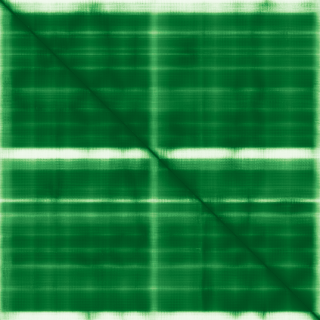
Mean pLDDT
90.4/ 100
Very high
423 residues
Confidence breakdown
- Very high(≥ 90)77%
- Confident(70–90)13%
- Low(50–70)6%
- Very low(< 50)4%
Open interactive 3D viewer
AlphaFold (Jumper et al., 2021) · CC BY 4.0
phosphatidylinositol glycan anchor biosynthesis class M
Annotations refreshed 3 months ago.
Diagnostic Grade (Green)
Congenital disorders of glycosylation
BIALLELIC, autosomal or pseudoautosomalEarly onset or syndromic epilepsy
BIALLELIC, autosomal or pseudoautosomalLikely inborn error of metabolism
BIALLELIC, autosomal or pseudoautosomalUndiagnosed metabolic disorders
BIALLELIC, autosomal or pseudoautosomalFetal anomalies
BIALLELIC, autosomal or pseudoautosomalChildhood onset dystonia, chorea or related movement disorder
DDG2P
BIALLELIC, autosomal or pseudoautosomalhypercoagulability syndrome due to glycosylphosphatidylinositol deficiency
hereditary disease
nephronophthisis
Genetic renal or urinary tract malformation
plasma cell myeloma
heart disorder
Hypercholesterolemia
cancer
infection
paroxysmal nocturnal hemoglobinuria
Score is the Open Targets composite evidence score (0-1). Higher = stronger gene-disease association.
GPI alpha-1,4-mannosyltransferase I, catalytic subunit
Catalytic subunit of the glycosylphosphatidylinositol-mannosyltransferase I complex which catalyzes the transfer of the first mannose, via an alpha-1,4 bond from a dolichol-phosphate-mannose (Dol-P-Man) to a 2-acyl-6-alpha-D-glucosaminyl-1-(1-radyl,2-acyl-sn-glycero-3-phospho)-1D-myo-inositol (glucosaminyl acyl phosphatidylinositol, GlcN-(acyl)PI) intermediate to generate 2-acyl-6-(alpha-D-mannosyl-(1->4)-alpha-D-glucosaminyl)-1-(1-radyl,2-acyl-sn-glycero-3-phospho)-1D-myo-inositol (also termed H2) and participates in the sixth step of the glycosylphosphatidylinositol-anchor biosynthesis
PIGM · Q9H3S5
Mean pLDDT
90.4/ 100
Very high
423 residues
Confidence breakdown
AlphaFold (Jumper et al., 2021) · CC BY 4.0