
AlphaFold predicted structure
PIGS · Q96S52
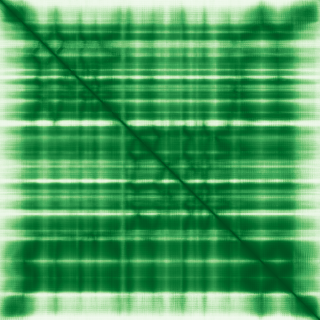
Mean pLDDT
85.5/ 100
Confident
555 residues
Confidence breakdown
- Very high(≥ 90)43%
- Confident(70–90)47%
- Low(50–70)8%
- Very low(< 50)2%
Open interactive 3D viewer
AlphaFold (Jumper et al., 2021) · CC BY 4.0
phosphatidylinositol glycan anchor biosynthesis class S
Annotations refreshed 2 months ago.
Diagnostic Grade (Green)
Congenital disorders of glycosylation
BIALLELIC, autosomal or pseudoautosomalDDG2P
BIALLELIC, autosomal or pseudoautosomalFetal anomalies
BIALLELIC, autosomal or pseudoautosomalIntellectual disability
BIALLELIC, autosomal or pseudoautosomalLikely inborn error of metabolism
BIALLELIC, autosomal or pseudoautosomalEarly onset or syndromic epilepsy
BIALLELIC, autosomal or pseudoautosomalArthrogryposis
glycosylphosphatidylinositol biosynthesis defect 18
neurodegenerative disease
hereditary disease
spinal cord injury
infection
cancer
cervical squamous intraepithelial neoplasia
Epileptic encephalopathy
cervical squamous cell carcinoma
clostridium difficile infection
Score is the Open Targets composite evidence score (0-1). Higher = stronger gene-disease association.
GPI-anchor transamidase component PIGS
Component of the glycosylphosphatidylinositol-anchor (GPI-anchor) transamidase (GPI-T) complex that catalyzes the formation of the linkage between a proprotein and a GPI-anchor and participates in GPI anchored protein biosynthesis
PIGS · Q96S52
Mean pLDDT
85.5/ 100
Confident
555 residues
Confidence breakdown
AlphaFold (Jumper et al., 2021) · CC BY 4.0