
AlphaFold predicted structure
PIGW · Q7Z7B1
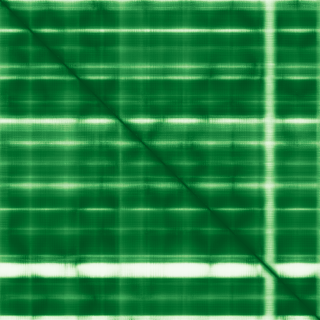
Mean pLDDT
87.5/ 100
Confident
504 residues
Confidence breakdown
- Very high(≥ 90)63%
- Confident(70–90)29%
- Low(50–70)3%
- Very low(< 50)5%
Open interactive 3D viewer
AlphaFold (Jumper et al., 2021) · CC BY 4.0
phosphatidylinositol glycan anchor biosynthesis class W
Annotations refreshed 2 months ago.
Diagnostic Grade (Green)
Congenital disorders of glycosylation
BIALLELIC, autosomal or pseudoautosomalEarly onset or syndromic epilepsy
BIALLELIC, autosomal or pseudoautosomalFetal anomalies
BIALLELIC, autosomal or pseudoautosomalIntellectual disability
BIALLELIC, autosomal or pseudoautosomalLikely inborn error of metabolism
BIALLELIC, autosomal or pseudoautosomalDDG2P
BIALLELIC, autosomal or pseudoautosomalhyperphosphatasia-intellectual disability syndrome
hereditary disease
hypercoagulability syndrome due to glycosylphosphatidylinositol deficiency
Global developmental delay
Abnormal skeletal morphology
cleft palate
schizophrenia
anorexia nervosa
attention deficit-hyperactivity disorder
type 2 diabetes mellitus
Score is the Open Targets composite evidence score (0-1). Higher = stronger gene-disease association.
Glucosaminyl-phosphatidylinositol-acyltransferase PIGW
Acyltransferase that catalyzes the acyl transfer from an acyl-CoA at the 2-OH position of the inositol ring of a 6-(alpha-D-glucosaminyl)-1-(1,2-diacyl-sn-glycero-3-phospho)-1D-myo-inositol (glucosaminyl phosphatidylinositol, GlcN-PI) to generate a 2-acyl-6-alpha-D-glucosaminyl-1-(1,2-diacyl-sn-glycero-3-phospho)-1D-myo-inositol (glucosaminyl acyl phosphatidylinositol, GlcN-(acyl)PI) and participates in the fourth step of GPI-anchor biosynthesis (By similarity). Required for the transport of GPI-anchored proteins to the plasma membrane (PubMed:24367057). Acylation during GPI-anchor biosynthesis is not essential for the subsequent mannosylation and is usually removed soon after the attachment of GPIs to proteins (By similarity)
PIGW · Q7Z7B1
Mean pLDDT
87.5/ 100
Confident
504 residues
Confidence breakdown
AlphaFold (Jumper et al., 2021) · CC BY 4.0