
AlphaFold predicted structure
PIKFYVE · Q9Y2I7
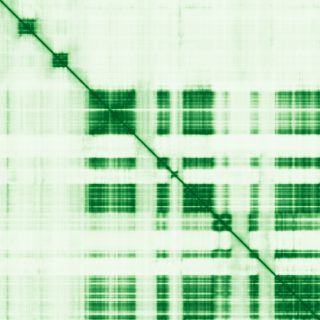
Mean pLDDT
63.2/ 100
Low
2,098 residues
Confidence breakdown
- Very high(≥ 90)30%
- Confident(70–90)24%
- Low(50–70)7%
- Very low(< 50)39%
Open interactive 3D viewer
AlphaFold (Jumper et al., 2021) · CC BY 4.0
phosphoinositide kinase, FYVE-type zinc finger containing
Annotations refreshed 2 months ago.
Diagnostic Grade (Green)
Corneal abnormalities
MONOALLELIC, autosomal or pseudoautosomal, NOT imprintedCorneal dystrophy
MONOALLELIC, autosomal or pseudoautosomal, NOT imprintedStructural eye disease
MONOALLELIC, autosomal or pseudoautosomal, NOT imprintedfleck corneal dystrophy
neurodegenerative disease
Alzheimer disease
lysosomal storage disease
Parkinson disease
multiple sclerosis
alcohol drinking
hereditary disease
Crohn disease
neoplasm
Score is the Open Targets composite evidence score (0-1). Higher = stronger gene-disease association.
1-phosphatidylinositol 3-phosphate 5-kinase
Dual specificity kinase implicated in myriad essential cellular processes such as maintenance of endomembrane homeostasis, and endocytic-vacuolar pathway, lysosomal trafficking, nuclear transport, stress- or hormone-induced signaling and cell cycle progression (PubMed:23086417). The PI(3,5)P2 regulatory complex regulates both the synthesis and turnover of phosphatidylinositol 3,5-bisphosphate (PtdIns(3,5)P2) (PubMed:17556371, PubMed:41639454). Sole enzyme to catalyze the phosphorylation of phosphatidylinositol 3-phosphate on the fifth hydroxyl of the myo-inositol ring, to form (PtdIns(3,5)P2) (PubMed:17556371, PubMed:41639454). Also catalyzes the phosphorylation of phosphatidylinositol on the fifth hydroxyl of the myo-inositol ring, to form phosphatidylinositol 5-phosphate (PtdIns(5)P) (PubMed:22621786). Has serine-protein kinase activity and is able to autophosphorylate and transphosphorylate. Autophosphorylation inhibits its own phosphatidylinositol 3-phosphate 5-kinase activity, stimulates FIG4 lipid phosphatase activity and down-regulates lipid product formation (PubMed:33098764). Involved in key endosome operations such as fission and fusion in the course of endosomal cargo transport (PubMed:22621786). Required for the maturation of early into late endosomes, phagosomes and lysosomes (PubMed:30612035). Regulates vacuole maturation and nutrient recovery following engulfment of macromolecules, initiates the redistribution of accumulated lysosomal contents back into the endosome network (PubMed:27623384). Critical regulator of the morphology, degradative activity, and protein turnover of the endolysosomal system in macrophages and platelets (By similarity). In neutrophils, critical to perform chemotaxis, generate ROS, and undertake phagosome fusion with lysosomes (PubMed:28779020). Plays a key role in the processing and presentation of antigens by major histocompatibility complex class II (MHC class II) mediated by CTSS (PubMed:30612035). Regulates melanosome biogenesis by controlling the delivery of proteins from the endosomal compartment to the melanosome (PubMed:29584722). Essential for systemic glucose homeostasis, mediates insulin-induced signals for endosome/actin remodeling in the course of GLUT4 translocation/glucose uptake activation (By similarity). Synthesis if (PtdIns(3,5)P2) is required for the cGAS-STING pathway (PubMed:41639454). Supports microtubule-based endosome-to-trans-Golgi network cargo transport, through association with SPAG9 and RABEPK (By similarity). Mediates EGFR trafficking to the nucleus (PubMed:17909029)
PIKFYVE · Q9Y2I7
Mean pLDDT
63.2/ 100
Low
2,098 residues
Confidence breakdown
AlphaFold (Jumper et al., 2021) · CC BY 4.0