Skip to content
GenoLensGenoLens

PKD2

Chr 4q22.1

polycystin 2, transient receptor potential cation channel

Aliases:
PKD4, PC2, Pc-2, TRPP2
MANE:
ENST00000237596.7

Annotations refreshed 1 month ago.

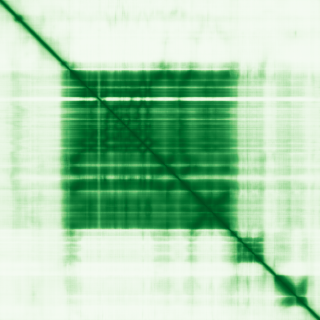
Predicted protein structure

Clinical relevance (Genomics England PanelApp)

Diagnostic Grade (Green)

  • Cystic kidney disease

    MONOALLELIC, autosomal or pseudoautosomal, NOT imprinted
  • Ductal plate malformation

    MONOALLELIC, autosomal or pseudoautosomal, NOT imprinted
  • Fetal anomalies

    MONOALLELIC, autosomal or pseudoautosomal, imprinted status unknown
  • Paediatric or syndromic cardiomyopathy

    MONOALLELIC, autosomal or pseudoautosomal, NOT imprinted
  • Polycystic liver disease

    MONOALLELIC, autosomal or pseudoautosomal, NOT imprinted
  • Rare multisystem ciliopathy disorders

    MONOALLELIC, autosomal or pseudoautosomal, imprinted status unknown
  • Renal ciliopathies

    MONOALLELIC, autosomal or pseudoautosomal, imprinted status unknown
  • Unexplained kidney failure in young people

    MONOALLELIC, autosomal or pseudoautosomal, NOT imprinted

+8 more panels — install the extension to see the full list inline on any page.

Disease associations (Open Targets)

  • polycystic kidney disease 2

    0.81
  • autosomal dominant polycystic kidney disease

    0.79
  • cystic kidney disease

    0.73
  • polycystic kidney disease

    0.69
  • chronic kidney disease

    0.66
  • kidney disorder

    0.63
  • Genetic renal or urinary tract malformation

    0.60
  • urinary system disorder

    0.59
  • Abnormality of the urinary system

    0.58
  • Meckel syndrome

    0.57

Score is the Open Targets composite evidence score (0-1). Higher = stronger gene-disease association.

Protein function (UniProt)

Polycystin-2

Forms a nonselective cation channel (PubMed:11854751, PubMed:11991947, PubMed:15692563, PubMed:26269590, PubMed:27071085, PubMed:31441214, PubMed:39009345). Can function as a homotetrameric ion channel or can form heteromer with PKD1 (PubMed:31441214, PubMed:33164752). Displays distinct function depending on its subcellular localization and regulation by its binding partners (PubMed:11854751, PubMed:11991947, PubMed:27214281, PubMed:29899465). In primary cilium functions as a cation channel, with a preference for monovalent cations over divalent cations that allows K(+), Na(+) and Ca(2+) influx, with low selectivity for Ca(2+) (PubMed:27071085). Involved in fluid-flow mechanosensation by the primary cilium in renal epithelium (By similarity). In the endoplasmic reticulum, likely functions as a K(+) channel to facilitate Ca(2+) release (By similarity). The heterotetrameric PKD1/PKD2 channel has higher Ca(2+) permeability than homomeric PKD2 channel and acts as a primarily Ca(2+)-permeable channel (PubMed:31441214). Interacts with and acts as a regulator of a number of other channels, such as TRPV4, TRPC1, IP3R, RYR2, ultimately further affecting intracellular signaling, to modulate intracellular Ca(2+) signaling (PubMed:11854751, PubMed:11991947, PubMed:27214281, PubMed:29899465). Together with TRPV4, forms mechano- and thermosensitive channels in cilium (PubMed:18695040). In cardiomyocytes, PKD2 modulates Ca(2+) release from stimulated RYR2 receptors through direct association (By similarity). Also involved in left-right axis specification via its role in sensing nodal flow; forms a complex with PKD1L1 in cilia to facilitate flow detection in left-right patterning (By similarity). Acts as a regulator of cilium length together with PKD1 (By similarity). Mediates systemic blood pressure and contributes to the myogenic response in cerebral arteries though vasoconstriction (By similarity)

Curated MONDO disease pages that list PKD2 among their top associated genes.

Data sources: HGNC (CC BY 4.0), AlphaFold (CC BY 4.0, Jumper et al. Nature 2021), Genomics England PanelApp (CC BY 4.0), ClinGen, Open Targets (CC0), UniProt.

Not for sole clinical decision-making. Always verify against primary sources.