
AlphaFold predicted structure
PKP2 · Q99959
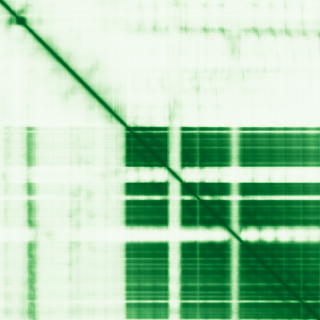
Mean pLDDT
64.1/ 100
Low
881 residues
Confidence breakdown
- Very high(≥ 90)42%
- Confident(70–90)9%
- Low(50–70)6%
- Very low(< 50)44%
Open interactive 3D viewer
AlphaFold (Jumper et al., 2021) · CC BY 4.0
plakophilin 2
Annotations refreshed 2 months ago.
Diagnostic Grade (Green)
Arrhythmogenic right ventricular cardiomyopathy
MONOALLELIC, autosomal or pseudoautosomal, NOT imprintedDilated and arrhythmogenic cardiomyopathy
MONOALLELIC, autosomal or pseudoautosomal, NOT imprintedPaediatric or syndromic cardiomyopathy
MONOALLELIC, autosomal or pseudoautosomal, NOT imprintedFetal anomalies
BIALLELIC, autosomal or pseudoautosomalBrugada syndrome and cardiac sodium channel disease
MONOALLELIC, autosomal or pseudoautosomal, NOT imprintedDilated Cardiomyopathy and conduction defects
MONOALLELIC, autosomal or pseudoautosomal, NOT imprintedHereditary neuropathy
Hereditary neuropathy or pain disorder
+2 more panels — install the extension to see the full list inline on any page.
Arrhythmogenic right ventricular dysplasia
arrhythmogenic right ventricular cardiomyopathy
cardiomyopathy
Abnormality of the cardiovascular system
familial isolated arrhythmogenic right ventricular dysplasia
atrial fibrillation
cardiac arrhythmia
left ventricular noncompaction
ventricular tachycardia
hypertrophic cardiomyopathy
Score is the Open Targets composite evidence score (0-1). Higher = stronger gene-disease association.
Plakophilin-2
A component of desmosome cell-cell junctions which are required for positive regulation of cellular adhesion (PubMed:25208567). Regulates focal adhesion turnover resulting in changes in focal adhesion size, cell adhesion and cell spreading, potentially via transcriptional modulation of beta-integrins (PubMed:23884246). Required to maintain gingival epithelial barrier function (PubMed:34368962). Important component of the desmosome that is also required for localization of desmosome component proteins such as DSC2, DSG2 and JUP to the desmosome cell-cell junction (PubMed:22781308, PubMed:25208567). Required for the formation of desmosome cell junctions in cardiomyocytes, thereby required for the correct formation of the heart, specifically trabeculation and formation of the atria walls (By similarity). Loss of desmosome cell junctions leads to mis-localization of DSP and DSG2 resulting in disruption of cell-cell adhesion and disordered intermediate filaments (By similarity). Modulates profibrotic gene expression in cardiomyocytes via regulation of DSP expression and subsequent activation of downstream TGFB1 and MAPK14/p38 MAPK signaling (By similarity). Required for cardiac sodium current propagation and electrical synchrony in cardiac myocytes, via ANK3 stabilization and modulation of SCN5A/Nav1.5 localization to cell-cell junctions (By similarity). Required for mitochondrial function, nuclear envelope integrity and positive regulation of SIRT3 transcription via maintaining DES localization at its nuclear envelope and cell tip anchoring points, and thereby preserving regulation of the transcriptional program (PubMed:35959657). Maintenance of nuclear envelope integrity protects against DNA damage and transcriptional dysregulation of genes, especially those involved in the electron transport chain, thereby preserving mitochondrial function and protecting against superoxide radical anion generation (PubMed:35959657). Binds single-stranded DNA (ssDNA) (PubMed:20613778). May regulate the localization of GJA1 to gap junctions in intercalated disks of the heart (PubMed:18662195). Involved in the inhibition of viral infection by influenza A viruses (IAV) (PubMed:28169297). Acts as a host restriction factor for IAV viral propagation, potentially via disrupting the interaction of IAV polymerase complex proteins (PubMed:28169297)
Curated MONDO disease pages that list PKP2 among their top associated genes.
PKP2 · Q99959
Mean pLDDT
64.1/ 100
Low
881 residues
Confidence breakdown
AlphaFold (Jumper et al., 2021) · CC BY 4.0