
AlphaFold predicted structure
PLG · P00747
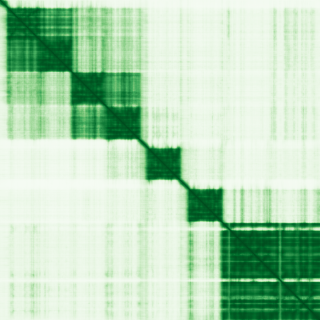
Mean pLDDT
82.8/ 100
Confident
810 residues
Confidence breakdown
- Very high(≥ 90)45%
- Confident(70–90)39%
- Low(50–70)7%
- Very low(< 50)9%
Open interactive 3D viewer
AlphaFold (Jumper et al., 2021) · CC BY 4.0
plasminogen
Annotations refreshed 2 months ago.
Diagnostic Grade (Green)
Fetal anomalies
BIALLELIC, autosomal or pseudoautosomalHydrocephalus
BIALLELIC, autosomal or pseudoautosomalPrimary immunodeficiency or monogenic inflammatory bowel disease
MONOALLELIC, autosomal or pseudoautosomal, NOT imprintedThrombophilia with a likely monogenic cause
BIALLELIC, autosomal or pseudoautosomalCOVID-19 research
UnknownInherited bleeding disorders
BIALLELIC, autosomal or pseudoautosomalhypoplasminogenemia
hereditary angioedema
hemorrhage
dysplasminogenemia
Menorrhagia
hepatic veno-occlusive disease
myocardial infarction
coronary artery disorder
Recurrent thrombophlebitis
atrial fibrillation
Score is the Open Targets composite evidence score (0-1). Higher = stronger gene-disease association.
Plasminogen
Protease which primary function is to degrade fibrin, the main component of blood clots (PubMed:6094526, PubMed:6919539). Also cleaves other components of blood clots like thrombospondin-1/THBS1 and von Willebrand factor/VWF (PubMed:24449821, PubMed:7679575). Can also directly and/or through the activation of other proteases degrade the various components of the extracellular matrix including collagen, fibronectin and laminin (PubMed:14699093, PubMed:28849762, PubMed:9171346). Thereby, regulates a variety of biological processes including embryonic development, tissue remodeling, and inflammation (PubMed:9171346). In ovulation, weakens the walls of the Graafian follicle (By similarity). In vitro, it is also able to cleave several complement zymogens, such as C1, C4 and C5 (PubMed:6447255)
PLG · P00747
Mean pLDDT
82.8/ 100
Confident
810 residues
Confidence breakdown
AlphaFold (Jumper et al., 2021) · CC BY 4.0