
AlphaFold predicted structure
PLK4 · O00444
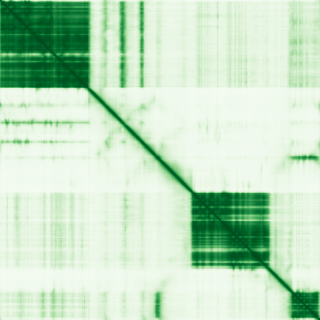
Mean pLDDT
65.6/ 100
Low
970 residues
Confidence breakdown
- Very high(≥ 90)36%
- Confident(70–90)20%
- Low(50–70)4%
- Very low(< 50)40%
Open interactive 3D viewer
AlphaFold (Jumper et al., 2021) · CC BY 4.0
polo like kinase 4
Annotations refreshed 3 months ago.
Diagnostic Grade (Green)
DDG2P
BIALLELIC, autosomal or pseudoautosomalFetal anomalies
BIALLELIC, autosomal or pseudoautosomalIntellectual disability
BIALLELIC, autosomal or pseudoautosomalMonogenic short stature
BIALLELIC, autosomal or pseudoautosomalRetinal disorders
BIALLELIC, autosomal or pseudoautosomalSevere microcephaly
BIALLELIC, autosomal or pseudoautosomalAnophthalmia or microphthalmia
BIALLELIC, autosomal or pseudoautosomalStructural eye disease
BIALLELIC, autosomal or pseudoautosomal+2 more panels — install the extension to see the full list inline on any page.
Seckel syndrome
neurodegenerative disease
microcephalic primordial dwarfism
Primary microcephaly
autosomal recessive primary microcephaly
microcephaly and chorioretinopathy 1
hereditary disease
Retinal dystrophy
breast cancer
neoplasm
Score is the Open Targets composite evidence score (0-1). Higher = stronger gene-disease association.
Serine/threonine-protein kinase PLK4
Serine/threonine-protein kinase that plays a central role in centriole duplication. Able to trigger procentriole formation on the surface of the parental centriole cylinder, leading to the recruitment of centriole biogenesis proteins such as SASS6, CPAP, CCP110, CEP135 and gamma-tubulin. When overexpressed, it is able to induce centrosome amplification through the simultaneous generation of multiple procentrioles adjoining each parental centriole during S phase. Phosphorylates 'Ser-151' of FBXW5 during the G1/S transition, leading to inhibit FBXW5 ability to ubiquitinate SASS6. Its central role in centriole replication suggests a possible role in tumorigenesis, centrosome aberrations being frequently observed in tumors. Also involved in deuterosome-mediated centriole amplification in multiciliated that can generate more than 100 centrioles. Also involved in trophoblast differentiation by phosphorylating HAND1, leading to disrupt the interaction between HAND1 and MDFIC and activate HAND1. Phosphorylates CDC25C and CHEK2. Required for the recruitment of STIL to the centriole and for STIL-mediated centriole amplification (PubMed:22020124). Phosphorylates CEP131 at 'Ser-78' and PCM1 at 'Ser-372' which is essential for proper organization and integrity of centriolar satellites (PubMed:30804208)
PLK4 · O00444
Mean pLDDT
65.6/ 100
Low
970 residues
Confidence breakdown
AlphaFold (Jumper et al., 2021) · CC BY 4.0