Skip to content
GenoLensGenoLens

PLXNA1

Chr 3q21.3

plexin A1

Aliases:
NOV
MANE:
ENST00000393409.3

Annotations refreshed 1 month ago.

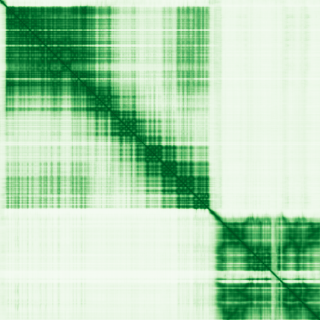
Predicted protein structure

Clinical relevance (Genomics England PanelApp)

Diagnostic Grade (Green)

  • Early onset or syndromic epilepsy

    MONOALLELIC, autosomal or pseudoautosomal, NOT imprinted
  • Fetal anomalies

    BOTH monoallelic and biallelic (but BIALLELIC mutations cause a more SEVERE disease form), autosomal or pseudoautosomal
  • Intellectual disability

    BOTH monoallelic and biallelic, autosomal or pseudoautosomal
  • DDG2P

    BOTH monoallelic and biallelic, autosomal or pseudoautosomal

Disease associations (Open Targets)

  • Dworschak-Punetha neurodevelopmental syndrome

    0.75
  • developmental and epileptic encephalopathy

    0.46
  • genetic developmental and epileptic encephalopathy

    0.46
  • neurodevelopmental disorder

    0.41
  • skin aging

    0.39
  • complex neurodevelopmental disorder

    0.37
  • placental retention

    0.35
  • ovarian dysfunction

    0.33
  • Apnea

    0.31
  • preeclampsia

    0.18

Score is the Open Targets composite evidence score (0-1). Higher = stronger gene-disease association.

Protein function (UniProt)

Plexin-A1

Coreceptor for SEMA3A, SEMA3C, SEMA3F and SEMA6D. Necessary for signaling by class 3 semaphorins and subsequent remodeling of the cytoskeleton. Plays a role in axon guidance, invasive growth and cell migration. Class 3 semaphorins bind to a complex composed of a neuropilin and a plexin. The plexin modulates the affinity of the complex for specific semaphorins, and its cytoplasmic domain is required for the activation of down-stream signaling events in the cytoplasm. Acts as coreceptor of TREM2 for SEMA6D in dendritic cells and is involved in the generation of immune responses and skeletal homeostasis

Curated MONDO disease pages that list PLXNA1 among their top associated genes.

Data sources: HGNC (CC BY 4.0), AlphaFold (CC BY 4.0, Jumper et al. Nature 2021), Genomics England PanelApp (CC BY 4.0), ClinGen, Open Targets (CC0), UniProt.

Not for sole clinical decision-making. Always verify against primary sources.