
AlphaFold predicted structure
PMEPA1 · Q969W9
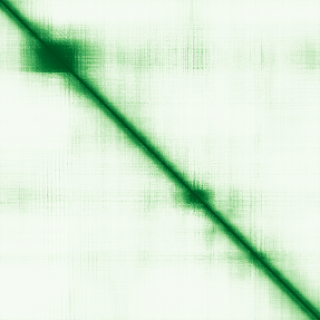
Mean pLDDT
56.7/ 100
Low
287 residues
Confidence breakdown
- Very high(≥ 90)7%
- Confident(70–90)12%
- Low(50–70)36%
- Very low(< 50)45%
Open interactive 3D viewer
AlphaFold (Jumper et al., 2021) · CC BY 4.0
prostate transmembrane protein, androgen induced 1
Annotations refreshed 2 months ago.
Diagnostic Grade (Green)
Thoracic aortic aneurysm or dissection (GMS)
MONOALLELIC, autosomal or pseudoautosomal, NOT imprintedneurodegenerative disease
Loeys-Dietz syndrome
thoracic aortic aneurysm
Tall stature
flatfoot
Dolichocephaly
generalized dystonia
fungal infectious disease
male reproductive organ cancer
pyogenic granuloma
Score is the Open Targets composite evidence score (0-1). Higher = stronger gene-disease association.
Protein TMEPAI
Functions as a negative regulator of TGF-beta signaling and thereby probably plays a role in cell proliferation, differentiation, apoptosis, motility, extracellular matrix production and immunosuppression. In the canonical TGF-beta pathway, ZFYVE9/SARA recruits the intracellular signal transducer and transcriptional modulators SMAD2 and SMAD3 to the TGF-beta receptor. Phosphorylated by the receptor, SMAD2 and SMAD3 then form a heteromeric complex with SMAD4 that translocates to the nucleus to regulate transcription. Through interaction with SMAD2 and SMAD3, LDLRAD4 may compete with ZFYVE9 and SMAD4 and prevent propagation of the intracellular signal (PubMed:20129061, PubMed:24627487). Also involved in down-regulation of the androgen receptor (AR), enhancing ubiquitination and proteasome-mediated degradation of AR, probably by recruiting NEDD4 (PubMed:18703514)
PMEPA1 · Q969W9
Mean pLDDT
56.7/ 100
Low
287 residues
Confidence breakdown
AlphaFold (Jumper et al., 2021) · CC BY 4.0