
AlphaFold predicted structure
PMVK · Q15126
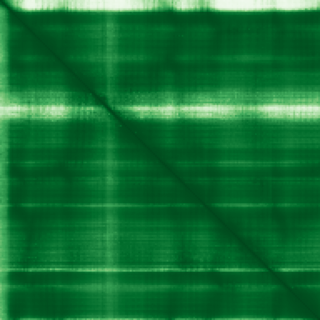
Mean pLDDT
92.4/ 100
Very high
192 residues
Confidence breakdown
- Very high(≥ 90)81%
- Confident(70–90)14%
- Low(50–70)5%
- Very low(< 50)0%
Open interactive 3D viewer
AlphaFold (Jumper et al., 2021) · CC BY 4.0
phosphomevalonate kinase
Annotations refreshed 3 months ago.
Moderate Evidence (Amber)
Mosaic skin disorders - deep sequencing
MONOALLELIC, autosomal or pseudoautosomal, NOT imprintedRare genetic inflammatory skin disorders
MONOALLELIC, autosomal or pseudoautosomal, NOT imprintedFamilial disseminated superficial actinic porokeratosis
MONOALLELIC, autosomal or pseudoautosomal, imprinted status unknownPigmentary skin disorders
MONOALLELIC, autosomal or pseudoautosomal, NOT imprintedporokeratosis 1, Mibelli type
neurodegenerative disease
porokeratosis
porokeratosis of Mibelli
linear porokeratosis
functional neutrophil defect
hereditary disease
atrial fibrillation
osteoarthritis, knee
total knee arthroplasty
Score is the Open Targets composite evidence score (0-1). Higher = stronger gene-disease association.
Phosphomevalonate kinase
Catalyzes the reversible ATP-dependent phosphorylation of mevalonate 5-phosphate to produce mevalonate diphosphate and ADP, a key step in the mevalonic acid mediated biosynthesis of isopentenyl diphosphate and other polyisoprenoid metabolites
PMVK · Q15126
Mean pLDDT
92.4/ 100
Very high
192 residues
Confidence breakdown
AlphaFold (Jumper et al., 2021) · CC BY 4.0