
AlphaFold predicted structure
PODXL · O00592
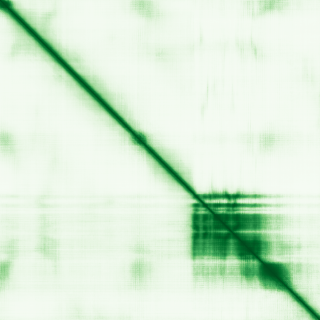
Mean pLDDT
52.9/ 100
Low
558 residues
Confidence breakdown
- Very high(≥ 90)5%
- Confident(70–90)18%
- Low(50–70)17%
- Very low(< 50)60%
Open interactive 3D viewer
AlphaFold (Jumper et al., 2021) · CC BY 4.0
podocalyxin like
Annotations refreshed 2 months ago.
Diagnostic Grade (Green)
Proteinuric renal disease
MONOALLELIC, autosomal or pseudoautosomal, NOT imprintedhypertensive disorder
Young adult-onset Parkinsonism
cardiovascular disorder
young-onset Parkinson disease
familial nephrotic syndrome
atypical juvenile parkinsonism
Increased blood pressure
schizophrenia
kidney disorder
Blindness
Score is the Open Targets composite evidence score (0-1). Higher = stronger gene-disease association.
Podocalyxin
Involved in the regulation of both adhesion and cell morphology and cancer progression. Functions as an anti-adhesive molecule that maintains an open filtration pathway between neighboring foot processes in the podocyte by charge repulsion. Acts as a pro-adhesive molecule, enhancing the adherence of cells to immobilized ligands, increasing the rate of migration and cell-cell contacts in an integrin-dependent manner. Induces the formation of apical actin-dependent microvilli. Involved in the formation of a preapical plasma membrane subdomain to set up initial epithelial polarization and the apical lumen formation during renal tubulogenesis. Plays a role in cancer development and aggressiveness by inducing cell migration and invasion through its interaction with the actin-binding protein EZR. Affects EZR-dependent signaling events, leading to increased activities of the MAPK and PI3K pathways in cancer cells
PODXL · O00592
Mean pLDDT
52.9/ 100
Low
558 residues
Confidence breakdown
AlphaFold (Jumper et al., 2021) · CC BY 4.0