
AlphaFold predicted structure
POGZ · Q7Z3K3
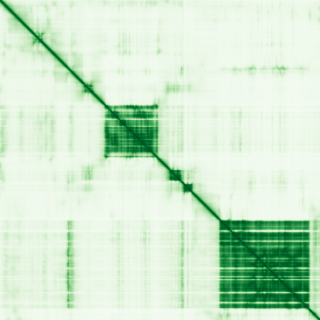
Mean pLDDT
57.3/ 100
Low
1,410 residues
Confidence breakdown
- Very high(≥ 90)9%
- Confident(70–90)33%
- Low(50–70)8%
- Very low(< 50)50%
Open interactive 3D viewer
AlphaFold (Jumper et al., 2021) · CC BY 4.0
pogo transposable element derived with ZNF domain
Annotations refreshed 2 months ago.
Diagnostic Grade (Green)
DDG2P
MONOALLELIC, autosomal or pseudoautosomal, imprinted status unknownFetal anomalies
MONOALLELIC, autosomal or pseudoautosomal, imprinted status unknownIntellectual disability
MONOALLELIC, autosomal or pseudoautosomal, NOT imprintedSevere microcephaly
MONOALLELIC, autosomal or pseudoautosomal, NOT imprintedClefting
MONOALLELIC, autosomal or pseudoautosomal, NOT imprintedintellectual disability-microcephaly-strabismus-behavioral abnormalities syndrome
Intellectual disability
white-sutton syndrome
autism spectrum disorder
hereditary disease
neurodegenerative disease
neurodevelopmental disorder
microcephaly
Global developmental delay
Smith-Magenis syndrome
Score is the Open Targets composite evidence score (0-1). Higher = stronger gene-disease association.
Pogo transposable element with ZNF domain
Plays a role in mitotic cell cycle progression and is involved in kinetochore assembly and mitotic sister chromatid cohesion. Probably through its association with CBX5 plays a role in mitotic chromosome segregation by regulating aurora kinase B/AURKB activation and AURKB and CBX5 dissociation from chromosome arms (PubMed:20562864). Promotes the repair of DNA double-strand breaks through the homologous recombination pathway (PubMed:26721387)
Curated MONDO disease pages that list POGZ among their top associated genes.
POGZ · Q7Z3K3
Mean pLDDT
57.3/ 100
Low
1,410 residues
Confidence breakdown
AlphaFold (Jumper et al., 2021) · CC BY 4.0