Skip to content
GenoLensGenoLens

POLD1

Chr 19q13.33

DNA polymerase delta 1, catalytic subunit

Aliases:
CDC2
MANE:
ENST00000440232.7

Annotations refreshed 1 month ago.

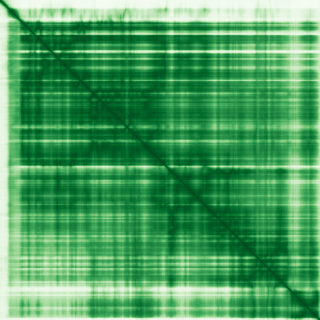
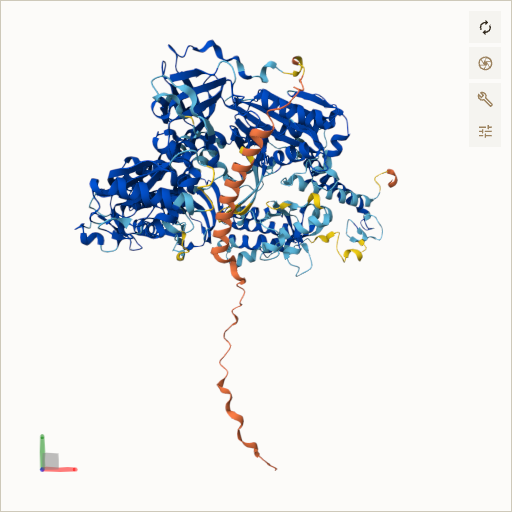
Predicted protein structure

Clinical relevance (Genomics England PanelApp)

Diagnostic Grade (Green)

  • Adult solid tumours cancer susceptibility

    MONOALLELIC, autosomal or pseudoautosomal, imprinted status unknown
  • Adult solid tumours for rare disease

    MONOALLELIC, autosomal or pseudoautosomal, imprinted status unknown
  • Colorectal cancer pertinent cancer susceptibility

    MONOALLELIC, autosomal or pseudoautosomal, NOT imprinted
  • COVID-19 research

    BIALLELIC, autosomal or pseudoautosomal
  • DDG2P

    MONOALLELIC, autosomal or pseudoautosomal, imprinted status unknown
  • Diabetes with additional phenotypes suggestive of a monogenic aetiology

    MONOALLELIC, autosomal or pseudoautosomal, NOT imprinted
  • Familial diabetes

    MONOALLELIC, autosomal or pseudoautosomal, NOT imprinted
  • GI tract tumours

    MONOALLELIC, autosomal or pseudoautosomal, NOT imprinted

+8 more panels — install the extension to see the full list inline on any page.

Disease associations (Open Targets)

  • mandibular hypoplasia-deafness-progeroid syndrome

    0.77
  • non-small cell lung carcinoma

    0.69
  • acute lymphoblastic leukemia

    0.67
  • colorectal cancer

    0.67
  • acute myeloid leukemia

    0.66
  • B-cell chronic lymphocytic leukemia

    0.66
  • colorectal cancer, susceptibility to, 10

    0.64
  • exocrine pancreatic carcinoma

    0.62
  • breast carcinoma

    0.61
  • neoplasm

    0.59

Score is the Open Targets composite evidence score (0-1). Higher = stronger gene-disease association.

Protein function (UniProt)

DNA polymerase delta catalytic subunit

As the catalytic component of the trimeric (Pol-delta3 complex) and tetrameric DNA polymerase delta complexes (Pol-delta4 complex), plays a crucial role in high fidelity genome replication, including in lagging strand synthesis, and repair (PubMed:16510448, PubMed:19074196, PubMed:20334433, PubMed:24022480, PubMed:24035200, PubMed:31449058). Exhibits both DNA polymerase and 3'- to 5'-exonuclease activities (PubMed:16510448, PubMed:19074196, PubMed:20334433, PubMed:24022480, PubMed:24035200). Requires the presence of accessory proteins POLD2, POLD3 and POLD4 for full activity. Depending upon the absence (Pol-delta3) or the presence of POLD4 (Pol-delta4), displays differences in catalytic activity. Most notably, expresses higher proofreading activity in the context of Pol-delta3 compared with that of Pol-delta4 (PubMed:19074196, PubMed:20334433). Although both Pol-delta3 and Pol-delta4 process Okazaki fragments in vitro, Pol-delta3 may be better suited to fulfill this task, exhibiting near-absence of strand displacement activity compared to Pol-delta4 and stalling on encounter with the 5'-blocking oligonucleotides. Pol-delta3 idling process may avoid the formation of a gap, while maintaining a nick that can be readily ligated (PubMed:24035200). Along with DNA polymerase kappa, DNA polymerase delta carries out approximately half of nucleotide excision repair (NER) synthesis following UV irradiation (PubMed:20227374). Under conditions of DNA replication stress, in the presence of POLD3 and POLD4, may catalyze the repair of broken replication forks through break-induced replication (BIR) (PubMed:24310611). Involved in the translesion synthesis (TLS) of templates carrying O6-methylguanine, 8oxoG or abasic sites (PubMed:19074196, PubMed:24191025)

Curated MONDO disease pages that list POLD1 among their top associated genes.

Data sources: HGNC (CC BY 4.0), AlphaFold (CC BY 4.0, Jumper et al. Nature 2021), Genomics England PanelApp (CC BY 4.0), ClinGen, Open Targets (CC0), UniProt.

Not for sole clinical decision-making. Always verify against primary sources.