Skip to content
GenoLensGenoLens

POLR3F

Chr 20p11.23

RNA polymerase III subunit F

Aliases:
RPC39, RPC6, C34
MANE:
ENST00000377603.5

Annotations refreshed 9 hours ago.

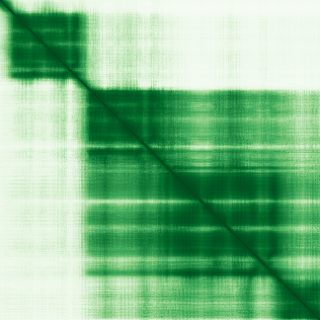
Predicted protein structure

Clinical relevance (Genomics England PanelApp)

Diagnostic Grade (Green)

  • COVID-19 research

    MONOALLELIC, autosomal or pseudoautosomal, NOT imprinted
  • Primary immunodeficiency or monogenic inflammatory bowel disease

    MONOALLELIC, autosomal or pseudoautosomal, NOT imprinted

Disease associations (Open Targets)

  • immunodeficiency 101 (varicella zoster virus-specific)

    0.43
  • atrial fibrillation

    0.03
  • neoplasm

    0.02
  • osteosarcoma

    0.02
  • cancer

    0.01
  • lymphoma

    0.01
  • age-related macular degeneration

    0.01
  • viral encephalitis

    0.01
  • encephalitis

    0.01
  • vasculitis

    0.01

Score is the Open Targets composite evidence score (0-1). Higher = stronger gene-disease association.

Protein function (UniProt)

DNA-directed RNA polymerase III subunit RPC6

DNA-dependent RNA polymerase catalyzes the transcription of DNA into RNA using the four ribonucleoside triphosphates as substrates (PubMed:20413673, PubMed:21358628, PubMed:33558764, PubMed:34675218). Specific peripheric component of RNA polymerase III (Pol III) which synthesizes small non-coding RNAs including 5S rRNA, snRNAs, tRNAs and miRNAs from at least 500 distinct genomic loci. Part of POLR3C/RPC3-POLR3F/RPC6-POLR3G/RPC7 heterotrimer that coordinates the dynamics of Pol III stalk and clamp modules during the transition from apo to elongation state (PubMed:20413673, PubMed:33558764, PubMed:33558766). Pol III plays a key role in sensing and limiting infection by intracellular bacteria and DNA viruses, including varicella zoster virus. Acts as a nuclear and cytosolic DNA sensor detecting AT-rich DNA, involved in innate immune response. Can sense non-self dsDNA that serves as template for transcription into dsRNA. The non-self RNA polymerase III transcripts, such as Epstein-Barr virus-encoded RNAs (EBERs) induce type I interferon and NF-kappa-B through the RIG-I pathway (PubMed:19609254, PubMed:19631370, PubMed:30211253). Preferentially binds double-stranded DNA (dsDNA) (PubMed:21358628)

Data sources: HGNC (CC BY 4.0), AlphaFold (CC BY 4.0, Jumper et al. Nature 2021), Genomics England PanelApp (CC BY 4.0), ClinGen, Open Targets (CC0), UniProt.

Not for sole clinical decision-making. Always verify against primary sources.