
AlphaFold predicted structure
POU3F2 · P20265
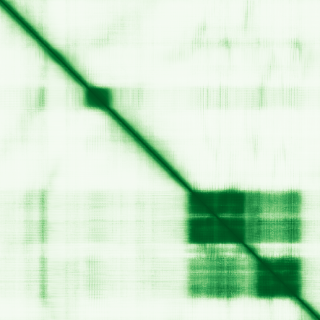
Mean pLDDT
60.9/ 100
Low
443 residues
Confidence breakdown
- Very high(≥ 90)23%
- Confident(70–90)14%
- Low(50–70)13%
- Very low(< 50)50%
Open interactive 3D viewer
AlphaFold (Jumper et al., 2021) · CC BY 4.0
POU class 3 homeobox 2
Annotations refreshed 2 months ago.
Diagnostic Grade (Green)
Intellectual disability
MONOALLELIC, autosomal or pseudoautosomal, imprinted status unknownneurodegenerative disease
intelligence
mathematical ability
attention deficit-hyperactivity disorder
autism spectrum disorder
Helicobacter pylori infectious disease
erectile dysfunction
alcohol drinking
arthropathy
substance abuse
Score is the Open Targets composite evidence score (0-1). Higher = stronger gene-disease association.
POU domain, class 3, transcription factor 2
Transcription factor that plays a key role in neuronal differentiation (By similarity). Binds preferentially to the recognition sequence which consists of two distinct half-sites, ('GCAT') and ('TAAT'), separated by a non-conserved spacer region of 0, 2, or 3 nucleotides (By similarity). Acts as a transcriptional activator when binding cooperatively with SOX4, SOX11, or SOX12 to gene promoters (By similarity). The combination of three transcription factors, ASCL1, POU3F2/BRN2 and MYT1L, is sufficient to reprogram fibroblasts and other somatic cells into induced neuronal (iN) cells in vitro (By similarity). Acts downstream of ASCL1, accessing chromatin that has been opened by ASCL1, and promotes transcription of neuronal genes (By similarity)
POU3F2 · P20265
Mean pLDDT
60.9/ 100
Low
443 residues
Confidence breakdown
AlphaFold (Jumper et al., 2021) · CC BY 4.0