
AlphaFold predicted structure
POU4F1 · Q01851
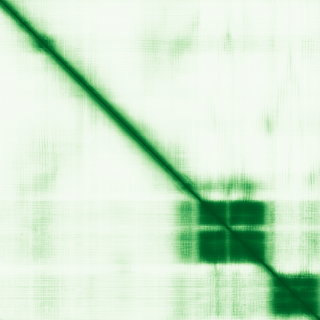
Mean pLDDT
60.8/ 100
Low
419 residues
Confidence breakdown
- Very high(≥ 90)24%
- Confident(70–90)9%
- Low(50–70)18%
- Very low(< 50)50%
Open interactive 3D viewer
AlphaFold (Jumper et al., 2021) · CC BY 4.0
POU class 4 homeobox 1
Annotations refreshed 2 months ago.
Diagnostic Grade (Green)
Ataxia and cerebellar anomalies - narrow panel
MONOALLELIC, autosomal or pseudoautosomal, NOT imprintedDDG2P
MONOALLELIC, autosomal or pseudoautosomal, imprinted status unknownataxia, intention tremor, and hypotonia syndrome, childhood-onset
neurodegenerative disease
Non-progressive cerebellar ataxia with intellectual disability
enthesopathy
ovarian neoplasm
smoking initiation
alcohol drinking
Abnormality of the skeletal system
urolithiasis
cholelithiasis
Score is the Open Targets composite evidence score (0-1). Higher = stronger gene-disease association.
POU domain, class 4, transcription factor 1
Multifunctional transcription factor with different regions mediating its different effects. Acts by binding (via its C-terminal domain) to sequences related to the consensus octamer motif 5'-ATGCAAAT-3' in the regulatory regions of its target genes. Regulates the expression of specific genes involved in differentiation and survival within a subset of neuronal lineages. It has been shown that activation of some of these genes requires its N-terminal domain, maybe through a neuronal-specific cofactor. Activates BCL2 expression and protects neuronal cells from apoptosis (via the N-terminal domain). Induces neuronal process outgrowth and the coordinate expression of genes encoding synaptic proteins. Exerts its major developmental effects in somatosensory neurons and in brainstem nuclei involved in motor control. Stimulates the binding affinity of the nuclear estrogene receptor ESR1 to DNA estrogen response element (ERE), and hence modulates ESR1-induced transcriptional activity. May positively regulate POU4F2 and POU4F3. Regulates dorsal root ganglion sensory neuron specification and axonal projection into the spinal cord. Plays a role in TNFSF11-mediated terminal osteoclast differentiation. Negatively regulates its own expression interacting directly with a highly conserved autoregulatory domain surrounding the transcription initiation site
POU4F1 · Q01851
Mean pLDDT
60.8/ 100
Low
419 residues
Confidence breakdown
AlphaFold (Jumper et al., 2021) · CC BY 4.0