
AlphaFold predicted structure
PPP2CA · P67775
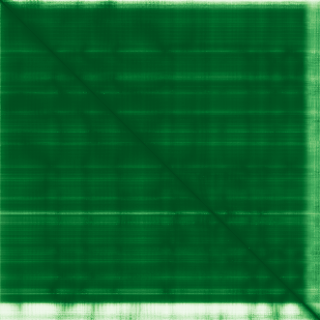
Mean pLDDT
95.1/ 100
Very high
309 residues
Confidence breakdown
- Very high(≥ 90)92%
- Confident(70–90)2%
- Low(50–70)2%
- Very low(< 50)4%
Open interactive 3D viewer
AlphaFold (Jumper et al., 2021) · CC BY 4.0
protein phosphatase 2 catalytic subunit alpha
Annotations refreshed 2 months ago.
Diagnostic Grade (Green)
DDG2P
MONOALLELIC, autosomal or pseudoautosomal, imprinted status unknownEarly onset or syndromic epilepsy
MONOALLELIC, autosomal or pseudoautosomal, imprinted status unknownFetal anomalies
MONOALLELIC, autosomal or pseudoautosomal, NOT imprintedIntellectual disability
MONOALLELIC, autosomal or pseudoautosomal, imprinted status unknownHouge-Janssens syndrome 3
neurodegenerative disease
cancer
Global developmental delay
Seizure
Intellectual disability
Feeding difficulties
Hypotonia
complex neurodevelopmental disorder
chronic myelogenous leukemia, BCR-ABL1 positive
Score is the Open Targets composite evidence score (0-1). Higher = stronger gene-disease association.
Serine/threonine-protein phosphatase 2A catalytic subunit alpha isoform
Catalytic subunit of protein phosphatase 2A (PP2A), a serine/threonine phosphatase involved in the regulation of a wide variety of enzymes, signal transduction pathways, and cellular events (PubMed:10801873, PubMed:12473674, PubMed:17245430, PubMed:22613722, PubMed:33243860, PubMed:34004147, PubMed:9920888). PP2A is the major phosphatase for microtubule-associated proteins (MAPs) (PubMed:22613722). PP2A can modulate the activity of phosphorylase B kinase casein kinase 2, mitogen-stimulated S6 kinase, and MAP-2 kinase (PubMed:22613722). Cooperates with SGO2 to protect centromeric cohesin from separase-mediated cleavage in oocytes specifically during meiosis I (By similarity). Can dephosphorylate various proteins, such as SV40 large T antigen, AXIN1, p53/TP53, PIM3, WEE1 (PubMed:10801873, PubMed:12473674, PubMed:17245430, PubMed:9920888). Activates RAF1 by dephosphorylating it at 'Ser-259' (PubMed:10801873). Mediates dephosphorylation of WEE1, preventing its ubiquitin-mediated proteolysis, increasing WEE1 protein levels, and promoting the G2/M checkpoint (PubMed:33108758). Mediates dephosphorylation of MYC; promoting its ubiquitin-mediated proteolysis: interaction with AMBRA1 enhances interaction between PPP2CA and MYC (PubMed:25438055). Mediates dephosphorylation of FOXO3; promoting its stabilization: interaction with AMBRA1 enhances interaction between PPP2CA and FOXO3 (PubMed:30513302). Catalyzes dephosphorylation of the pyrin domain of NLRP3, promoting assembly of the NLRP3 inflammasome (By similarity). Together with RACK1 adapter, mediates dephosphorylation of AKT1 at 'Ser-473', preventing AKT1 activation and AKT-mTOR signaling pathway (By similarity). Dephosphorylation of AKT1 is essential for regulatory T-cells (Treg) homeostasis and stability (By similarity). Catalyzes dephosphorylation of PIM3, promoting PIM3 ubiquitination and proteasomal degradation (PubMed:12473674). Part of the striatin-interacting phosphatase and kinase (STRIPAK) complexes (PubMed:33633399). STRIPAK complexes have critical roles in protein (de)phosphorylation and are regulators of multiple signaling pathways including Hippo, MAPK, nuclear receptor and cytoskeleton remodeling (PubMed:33633399). Different types of STRIPAK complexes are involved in a variety of biological processes such as cell growth, differentiation, apoptosis, metabolism and immune regulation (PubMed:33633399). Key mediator of a quality checkpoint during transcription elongation as part of the Integrator-PP2A (INTAC) complex (PubMed:33243860, PubMed:34004147, PubMed:37080207). The INTAC complex drives premature transcription termination of transcripts that are unfavorably configured for transcriptional elongation: within the INTAC complex, PPP2CA catalyzes dephosphorylation of the C-terminal domain (CTD) of Pol II subunit POLR2A/RPB1 and SUPT5H/SPT5, thereby preventing transcriptional elongation (PubMed:33243860, PubMed:34004147, PubMed:37080207)
PPP2CA · P67775
Mean pLDDT
95.1/ 100
Very high
309 residues
Confidence breakdown
AlphaFold (Jumper et al., 2021) · CC BY 4.0